Selling Multiple Converters? Here's How to Organize Your Details Before You Submit
You have several converters sitting in your yard, your garage, or your shop. They came off different vehicles. They might be different ages, different manufacturers, different conditions. You're wondering what they're worth — and you've probably noticed that palladium price today keeps showing up in your research.
That's not an accident. Palladium is one of three platinum group metals (PGMs) that make converters valuable. But the palladium price you see quoted in a financial headline isn't what you get paid per converter. What matters is how much palladium — and platinum, and rhodium — is actually loaded inside each specific unit.
That loading varies. A lot. And that's exactly why organizing your converters correctly before you submit a purchase enquiry matters.
---Why Each Converter Needs to Be Treated Individually
It's tempting to think of several converters as a batch with one value. That's rarely accurate. A converter from a diesel pickup has a different substrate and different PGM loading than one from a compact sedan. A high-mileage unit from a 2005 Corolla isn't the same as a lightly used one from a 2019 Tacoma.
Condition matters too. A cracked substrate, a crushed shell, or a converter that's been cut or opened changes the picture. Keep your converters intact. Don't remove, open, alter, or process them before enquiring. The material inside needs to stay where it is.
When you treat every converter as its own item with its own details, you give the reviewing party the information they actually need to assess eligibility and work toward an offer.
---What Details to Gather for Each Converter
You don't need a lab report. You need organized, honest information. Here's what helps:
- Vehicle make, model, and year — if you know it. This is one of the most useful data points for identifying converter type and estimating PGM content. If you genuinely don't know the vehicle, say so. That's different from unclear ownership, and SMASH can help you sort out what you actually have.
- VIN — if available. A VIN can narrow down the exact converter specification. If you have it, include it.
- Serial number or part number on the converter shell — look for stamped numbers or labels directly on the unit. These help with identification even when vehicle info is unknown.
- Physical condition — is the shell intact? Is there visible damage, crushing, or rattling that suggests a broken substrate? Describe what you see honestly.
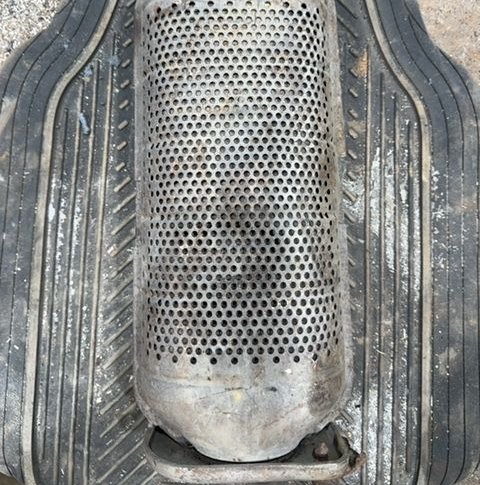
- Photos — take clear images of each converter individually: both ends, the shell, and any visible markings. Good documentation gives reviewers more confidence and reduces back-and-forth.
- How you came to have the converter — you need to be a lawful owner. If you removed a converter from a vehicle you own, say so. If you have paperwork, have it ready. Unclear source is a separate issue from unknown make; don't conflate them.
Do this for each unit separately. Even if two converters look similar, document them individually. Assuming they're identical when they're not costs you accuracy.
---Palladium Price Today: What It Does and Doesn't Tell You
Palladium spot price moves daily. So do platinum and rhodium. If you're checking palladium price today to estimate what your converters are worth, you're on the right track — but only partway there.
Spot price tells you what refined palladium is trading for per troy ounce on the metals market. It doesn't tell you how many grams of palladium are inside your specific converter. It doesn't account for processing costs, assay results, or the difference between a gasoline-engine converter loaded with palladium versus a diesel unit that may carry more platinum instead.
PGM content varies by:
- Vehicle type and engine
- Manufacturer and production year
- OEM versus aftermarket converter
- Substrate condition and substrate material (ceramic vs. metallic)
Palladium price today is one input. The converter's actual loading and condition are the other. You need both to understand value. For current context on how PGM pricing factors into converter valuation, read scrap converter pricing guides that break down the relationship between spot price and scrap value.
---A Note on Nashville and What It Does or Doesn't Change
If you're organizing converters in the Nashville area, the same documentation principles apply to you as they do to anyone else submitting an enquiry. Your location in Tennessee doesn't automatically establish local pickup, local service infrastructure, or a guaranteed offer. Those details get confirmed through the actual enquiry process.
What Nashville sellers can do is submit their converter details — including photos, serial numbers, VINs where available, and condition notes — and go through the same purchase eligibility review as any other seller. For general context on Nashville scrap metal services, that page can give you a starting point, but it's the details you submit that drive the actual review.
Use USD for any pricing conversation. This is a U.S.-based enquiry process, and offers — if any are made — will be in USD. Payment terms, timing, and method follow whatever is stated in an accepted offer. Don't assume those details in advance.
---Practical Tips for Submitting Multiple Converters
- Number your units before you photograph them. Label each converter 1, 2, 3 in your photos so your submission stays organized. It's easy to mix up descriptions if you don't.
- Don't group unknown converters under one description. If you have three converters and only know the vehicle for two of them, describe the third separately with what you do know — markings, dimensions, condition.
- Be upfront about condition issues. A broken substrate isn't necessarily disqualifying, but misrepresenting it wastes everyone's time. Describe what's actually there.
- Have your ownership documentation ready. You don't need to upload it in a first enquiry, but know where it is.
- Ask what you don't know. If you're unsure whether a particular converter type is eligible or what information format works best, ask SMASH directly.
More buyers seeing accurate, well-documented information leads to better price discovery. That's the principle behind how SMASH approaches converter purchasing. SMASH converter information outlines how the process works and what sellers can expect from an eligibility review.
---What Happens After You Submit
Submitting your converter details is the start of a purchase eligibility review — not an automatic offer or shipping approval. SMASH will review what you've submitted. If the material is eligible and an offer is made, you'll receive it in USD with specific terms. Shipping instructions, if applicable, come from SMASH after eligibility is confirmed — not from a quote request alone.
Don't ship anything on the assumption that submitting equals approval. Wait for confirmation. That protects you and keeps the process clean.
When you're ready to move forward, find the best scrap converter prices today by submitting your converter details directly for a purchase eligibility review.
---Frequently Asked Questions
Q: Does palladium price today directly determine what I get paid for my converter in Nashville?
Not directly. Palladium spot price is one factor, but what you're paid depends on how much palladium — and platinum and rhodium — is actually loaded in your specific converter. That loading varies by vehicle, manufacturer, year, and condition. A reviewer needs your converter details to work toward any offer.
Q: I have several converters from different vehicles. Should I submit them together or separately?
Document them separately, even if you submit them in the same enquiry. Each converter has its own make, model, serial number, and condition. Grouping unlike converters under one description reduces the accuracy of any review. Label and photograph each unit individually before you submit.
Q: I don't know what vehicle one of my converters came from. Can I still submit an enquiry?
Yes. Unknown vehicle make is not the same as unclear ownership. Describe what you do know — any markings, part numbers, or stamped codes on the shell, plus the physical condition. SMASH can help clarify what you have. What matters is that you're a lawful owner of the material.
Q: Does SMASH have a physical location in Nashville, Tennessee?
A Nashville location page exists as a navigation reference, but it doesn't confirm a local office, local staff, or guaranteed local service. Submit your enquiry through the standard process and confirm logistics directly with SMASH. Don't assume local pickup or dropoff is available without confirming it.
Q: How do I check current scrap converter prices before I submit?
You can research PGM spot prices and general converter pricing guides to get context, but no published price replaces an actual eligibility review. Converter values depend on specific details — vehicle, condition, PGM loading — that vary unit by unit. Use published prices as background information, then submit your details to get a real assessment.