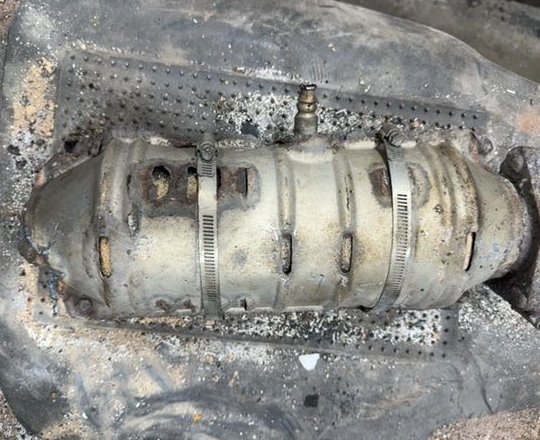
From Your Car to the Furnace: How Catalytic Converter Assaying and Smelting Actually Works
Most converter sellers in Boston hand over their cats and take whatever number the buyer throws at them. They have no idea what happens next — or why that number is what it is. That gap in knowledge costs real money.
Understanding how assaying and smelting work doesn't make you a metallurgist. It makes you a harder person to lowball. If you've ever asked yourself how do I find out how much my catalytic converter is worth, the answer starts here — inside the process that determines every payout in this industry.
Platforms like SMASH Scrap — where verified buyers bid on your metal are built around this kind of transparency. But first, you need to understand what actually happens to your converter after it leaves your hands.
What's Inside a Catalytic Converter That Has Any Value
Your catalytic converter is a ceramic or metallic honeycomb substrate coated with a wash of precious metals. Three metals drive virtually all the value: platinum (Pt), palladium (Pd), and rhodium (Rh). These are the platinum group metals — PGMs — and their concentrations vary significantly by vehicle make, model, year, and engine type.
Rhodium is typically the most volatile of the three. The rhodium price today can swing dramatically on thin liquidity, and even a modest shift affects your payout more than most sellers realize. Palladium and platinum track global demand from automotive manufacturing, industrial applications, and investment flows. When you check scrap metal prices today, the PGM spot prices underneath those numbers are what actually move the needle on converter value.
The physical quantities involved are small. A typical converter substrate might contain:
- 1 to 6 grams of platinum
- 2 to 7 grams of palladium
- 0.5 to 2 grams of rhodium (sometimes higher in performance applications)
Small amounts, but at current PGM prices, that adds up fast. The key question is: how does a buyer accurately measure what's actually in there? That's where assaying comes in.
The Assaying Process: How Buyers Figure Out What Your Converter Is Worth
Assaying is the science of determining the precise concentration of precious metals in a sample. For catalytic converters, the process typically follows a standardized sequence — and understanding it is essential if you want to find the best scrap converter prices today.
Step 1: Decanning and Sampling
The outer steel shell is cut away to expose the substrate — the ceramic or metallic monolith inside. The substrate is then shredded or milled into a fine, homogeneous powder. Homogeneity matters enormously. If the powder isn't uniform, the sample you pull won't represent the whole unit, and the assay result will be inaccurate.
Step 2: Representative Sampling
From the milled powder, a statistically representative sample is extracted — typically a few grams from a batch that may weigh kilograms. This is why lot-based sampling (assaying multiple converters together) introduces variability for individual sellers. The larger the lot, the more statistically reliable the result — but individual units within that lot can vary widely.
Step 3: Dissolution and Analysis
The sample is dissolved in acid — often aqua regia, a mixture of nitric and hydrochloric acid that dissolves PGMs. The resulting solution is analyzed using techniques like:
- ICP-MS (Inductively Coupled Plasma Mass Spectrometry) — highly precise, identifies and quantifies each metal at trace levels
- ICP-OES (Optical Emission Spectrometry) — similar precision, slightly different methodology
- Fire Assay — a traditional metallurgical method still used for verification in some smelters
The lab returns a result in grams per metric ton (g/t) or parts per million (ppm) for each PGM. Those concentrations, multiplied by the total weight of material processed, give the refiner a total recoverable precious metal figure.
Smelting: Turning Ceramic Powder Into Recoverable Metal
Assaying tells you what's there. Smelting is how you get it out. The two processes are connected but distinct — and the smelting step is where your converter's value is physically realized.
After assaying, the milled converter material goes into a smelter. High-temperature furnaces — typically electric arc or plasma furnaces — melt the material at temperatures exceeding 1,400°C. A collector metal (often iron, copper, or lead, depending on the facility) is added to the melt. PGMs have a strong affinity for these collector metals and migrate into the molten collector phase, separating from the slag.
The resulting alloy — now concentrated in PGMs — is cast into a matte or button and sent to a refinery for further processing. At the refinery, chemical separation isolates individual metals: platinum, palladium, and rhodium are separated and refined to high-purity product.
This entire chain — from your converter to finished refined metal — typically takes weeks to months depending on the refiner's processing queue and lot size. That's why buyers who offer fast payouts are usually paying you on an estimated or provisional basis, not a final assay result.
Why This Process Directly Affects the Best Catalytic Converter Price in Boston
Here's where it gets practical for sellers in Boston and across Massachusetts.
Every buyer you deal with is working backward from the same math: spot price of PGMs × recoverable ounces × their recovery rate − their processing costs − their margin = what they offer you. The variables that differ between buyers are their recovery rates, their processing costs, and — critically — their margin expectations.
A buyer with access to a high-recovery smelter and a lean operation can offer you more than a middleman who's moving your cats through a chain of handlers. A buyer with excess inventory or cash flow pressure might low-ball you regardless of what the metal is worth. None of this is visible to you on a cold call or a handshake deal.
That's the core problem with the old way of selling converters in Boston: one buyer, one number, no leverage. You don't know if you're getting fair value or leaving serious money on the table. The best catalytic converter price isn't posted anywhere obvious — it's discovered through competition.
That's exactly what the SMASH scrap metal auction model is built to address. When multiple vetted buyers see your documented inventory and bid against each other, price discovery happens. You're not guessing. You're not negotiating blind. You're letting the market tell you what your metal is worth. Read scrap converter pricing guides to understand how auction-based selling compares to traditional yard negotiations.
If you're handling converter inventory in Boston, connecting with Boston scrap metal services that understand the local market and PGM pricing dynamics is a smart first step.
How to Use This Knowledge to Get a Better Price
You don't need a lab to use this information strategically. Here's what knowing the assay and smelting process actually lets you do:
- Ask better questions. When a buyer quotes you, ask whether they're quoting based on a published price list, estimated assay, or final assay. The answer tells you a lot about how the offer was calculated.
- Document your inventory properly. Serial numbers, OEM part numbers, photos, and condition notes all help buyers assess value more accurately — and give you more credibility in a competitive bid situation. SMASH's inventory tools are built specifically for this.
- Understand lot composition. Mixing high-value and low-value units in a lot affects the blended assay result. Sorting by grade before selling can improve your overall return.
- Track PGM spot prices. Rhodium especially. If rhodium price today is at a peak, that's not the time to accept a stale quote from a buyer who hasn't updated their price list. Check scrap metal prices today before any deal.
- Use competitive platforms. A single buyer has every incentive to offer you less than market. Multiple buyers competing for your load? That's how you find the actual market price. Check current scrap converter prices and compare before committing to any offer.
The assay process is standardized. The smelting chemistry is fixed. What varies is the commercial relationship — and that's exactly where you have leverage if you use it.
Regulation, Documentation, and What Boston Sellers Need to Know in 2026
Catalytic converter theft remains a significant enforcement focus across Massachusetts and the broader Northeast in 2026. State-level regulations governing converter sales — including documentation requirements for sellers and buyers — have tightened considerably in recent years. Massachusetts sellers should be prepared to provide:
- Proof of vehicle ownership or business licensing for commercial lots
- Photo documentation of units
- Accurate serial or part number records where available
- Bill of lading or transfer documentation for larger lots
Beyond compliance, this documentation works in your favor. Buyers on platforms like SMASH expect documented inventory — and they price it better. A verified, well-documented lot of converters from a Boston-area yard is easier to underwrite and easier to bid on competitively. Sloppy paperwork narrows your buyer pool and depresses your offers.
The documentation requirement isn't just a regulatory burden. It's also your best tool for getting the best catalytic converter price in a competitive market.
When you're ready to stop guessing and start selling smarter, SMASH Scrap — where verified buyers bid on your metal gives you the competitive structure the old way never offered. No subscription fees. No single-buyer guessing games. Just documented inventory, vetted buyers, and real price discovery.
If you're in Boston or anywhere across Massachusetts, the process starts with knowing what you have — and knowing how to get multiple buyers competing for it. Take the first step and find the best scrap converter prices today at best-scrap-converter-prices.com.
Frequently Asked Questions
Q: How do I find out how much my catalytic converter is worth?
Start by identifying the unit — OEM part number, serial number, or vehicle application. Cross-reference that against current PGM spot prices (platinum, palladium, rhodium). Platforms like SMASH let vetted buyers bid on documented inventory, which is the most reliable way to discover actual market value rather than relying on a single buyer's estimate.
Q: What is the best catalytic converter price I can expect in Boston?
There's no single posted price — converter value depends on the specific unit, current PGM spot prices, and how many buyers are competing for your inventory. Boston sellers with documented lots and access to competitive platforms consistently outperform those relying on a single local buyer. Check current market rates before accepting any offer.
Q: How long does catalytic converter assaying and smelting take?
The full process — from receiving your material to final assay results — typically takes several weeks to a few months depending on lot size and refiner queue. Buyers offering same-day or fast payouts are generally working from estimated values, not confirmed assay data. Understand whether you're being paid on an estimate or a final result before agreeing to terms.
Q: Does the rhodium price today affect my converter payout?
Yes, significantly. Rhodium is often the highest-value PGM in a converter by weight, and its price is volatile. A meaningful shift in the rhodium spot price can move your payout noticeably even on a single unit. Always check current PGM prices before finalizing any sale — don't accept a quote that's days or weeks old.
Q: Do Massachusetts sellers need special documentation to sell catalytic converters in 2026?
Yes. Massachusetts has documentation requirements for converter sales, including proof of ownership or commercial licensing, photo records, and transfer documentation for larger lots. Beyond compliance, proper documentation improves your buyer pool and typically results in better offers — documented inventory is easier for buyers to assess and bid on confidently.
Follow SMASH on LinkedIn for industry updates, PGM market insights, and scrap metal pricing trends across North America.
```