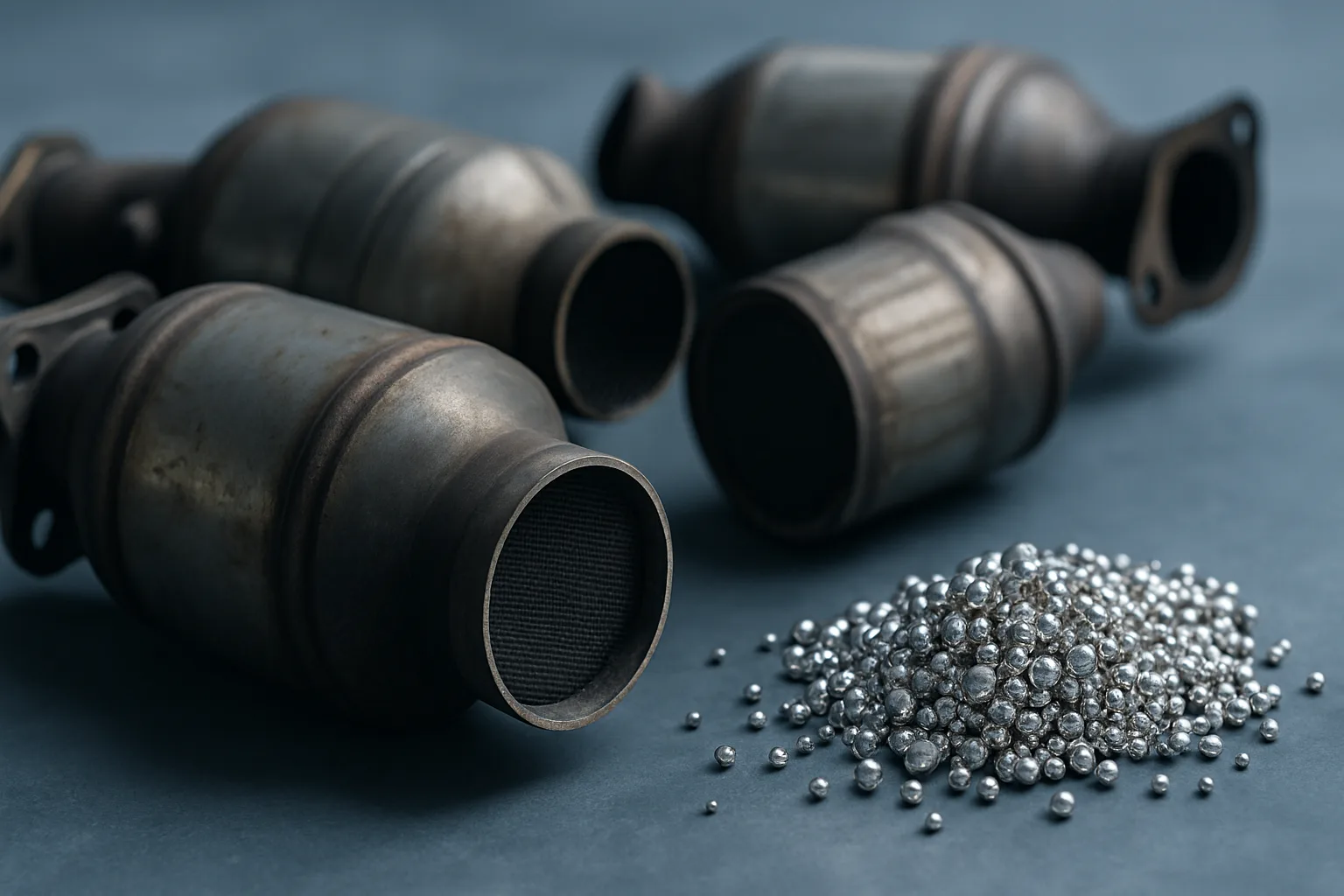
From Exhaust to Extraction: What Really Happens to Your Catalytic Converter
Most people pulling a catalytic converter off a vehicle think the story ends at the scrap yard. It doesn't. The converter you hand over today could end up fueling battery technology, jewelry, or the next generation of clean energy systems — because the precious metals inside are that valuable. Understanding the full lifecycle helps you make smarter decisions about where you sell, who you trust, and how to find the best scrap converter prices today.
If you're in Fresno or anywhere across California, you've got options. But not all of them are equal. Knowing what happens after the handoff gives you real leverage — and helps you avoid leaving money on the table.
Stage One: The Converter Leaves the Vehicle
It starts with removal. Whether you're a salvage yard pulling converters off crushed vehicles, an auto shop collecting cores from exhaust jobs, or an individual seller with a single unit, the process begins the same way. The converter is cut or unbolted, logged, and staged for sale.
This is where most sellers make their first mistake: they don't document what they have. A converter without a VIN association, clear photos, or a serial number is harder to value accurately. Buyers price in uncertainty — meaning undocumented units often sell for less than they're worth. Platforms like smashscrap.com address this directly with built-in photo documentation and serial tracking tools that help sellers present inventory clearly and confidently.
At this stage, the key details that affect converter scrap value include:
- Make, model, and year of the source vehicle
- Serial or part number on the converter body
- Physical condition — cracked, rattling, or hollowed-out units are worth significantly less
- Type — OEM converters typically carry more precious metal content than aftermarket units
Stage Two: The Pricing Problem — and Why Transparency Matters
Here's where catalytic converter recycling in Fresno — and everywhere else — gets complicated. Converter prices are not fixed. They move with the spot prices of platinum, palladium, and rhodium on global commodity markets. A converter worth $200 in January might be worth $280 in March or $160 in August. That volatility is real, and it's why the old model of calling one buyer and accepting their number is fundamentally broken.
Without market exposure, you're trusting one person's margin calculation. That buyer has every incentive to offer you less. They know what the refiner will pay. You don't — or at least, you didn't before tools like a how much is my catalytic converter worth calculator free tool and auction-based platforms changed the equation.
The smarter approach: get multiple eyes on your inventory. Competition reveals the market. When vetted buyers bid against each other for your load, the price discovery process works in your favor — not against you. That's not a sales pitch. That's basic economics. You can also check current scrap converter prices to understand where the market sits before you commit to anything.
For Fresno sellers specifically, the local buyer landscape matters. Options like Brown's Aluminum & Catalytic Converter Scrap Yard serve parts of the Central Valley market, but local-only pricing means local-only competition. A national or North American buyer pool broadens that competition significantly.
Stage Three: Grading, Sorting, and Pre-Processing
Once a converter reaches a processor or aggregator, it gets graded. This is one of the most consequential — and least understood — steps in the lifecycle. Graders sort converters by type and precious metal loading, which determines the price paid back to the original seller.
Common converter categories include:
- Foil units — typically found in older European vehicles, lighter PGM content
- Ceramic substrate units — the most common type, wide range of PGM loading depending on make and model
- Diesel particulate filters (DPFs) — contain platinum but require different processing
- Air tubes and pre-cats — smaller units, often overlooked but still valuable
- Aftermarket or "biscuit" converters — lower precious metal content, priced accordingly
Misidentification at this stage costs sellers money. If your OEM Toyota or Ford converter gets lumped into a lower-value category, you absorb that loss. Accurate documentation — photos, serial numbers, VIN lookups — protects you. This is exactly why SMASH's inventory tool and VIN lookup feature exist: to create a clear, defensible record before your load ever changes hands.
Stage Four: Precious Metal Assay and Refining
After grading, converters move to decanning (removing the substrate from the steel shell) and then to sampling and assay. The substrate — that honeycomb ceramic or metallic foil inside — holds the platinum group metals (PGMs): platinum, palladium, and rhodium.
Refiners crush, blend, and sample large lots to determine PGM content per unit. The assay results, combined with current scrap metal prices today on global markets, determine final settlement value. This process typically takes several weeks for large lots.
Here's the critical point: the further your converter travels from you before settlement, the more opportunities there are for margin to get extracted by middlemen. The goal of any smart seller is to minimize those layers. Fewer hands between your unit and the refiner means more value stays with you.
For California sellers — whether you're in Fresno, Bakersfield, or Stockton — understanding this chain matters. The Central Valley produces significant scrap volume. Aligning with buyers who have direct refinery relationships, or platforms that connect you to that tier of buyer, changes your outcome.
Stage Five: PGM Recovery and Re-Entry Into Global Supply Chains
Once refined, the recovered platinum, palladium, and rhodium re-enter global supply chains. These metals don't disappear — they're remarkably durable and infinitely recyclable. Your old converter's platinum might end up in:
- New automotive catalytic converters (yes, the cycle repeats)
- Hydrogen fuel cell technology
- Industrial chemical processing equipment
- Medical and laboratory instruments
- High-end electronics and circuit boards
Palladium in particular has seen sustained industrial demand through the mid-2020s, driven by hybrid vehicle production and electronics manufacturing. Rhodium remains one of the most volatile and valuable metals by weight in the scrap stream. These fundamentals are why converter scrap value remains significant even as PGM spot prices fluctuate — there's real, durable industrial demand on the other side of every transaction.
This is also why the catalytic converter price you're quoted today isn't just about supply and demand at your local yard. It's tied to London Metal Exchange spot prices, global automotive production cycles, and refinery capacity. Knowing that context makes you a smarter negotiator.
What This Means for Fresno Sellers in August 2026
The PGM market in mid-2026 remains active but price-sensitive. Palladium has faced headwinds from the ongoing shift toward battery electric vehicles in certain segments, while platinum demand from hydrogen applications continues to grow. Rhodium has stabilized after years of extreme volatility. None of this means converters are worthless — far from it. It means the difference between a well-documented, competitively sold load and a rushed single-buyer transaction is more significant than ever.
If you're a catalytic converter buyer Fresno shop, a salvage operation, or an individual seller in the Central Valley, the smartest move right now is to ensure your inventory is documented, your buyers are vetted, and your pricing is market-driven — not one buyer's take-it-or-leave-it offer.
Platforms like SMASH exist precisely for this moment. No subscription fees. Auction format. Vetted buyers competing for your load. Auto-invoicing and documentation built in. If you want to understand your position before you commit, read scrap converter pricing guides that break down current market dynamics and help you benchmark what you should expect.
The lifecycle of a catalytic converter is longer and more valuable than most sellers realize. You deserve to capture your fair share of that value — not hand it to a middleman who counted on you not knowing better. When you're ready to move your inventory the right way, find the best scrap converter prices and get a free quote at best-scrap-converter-prices.com. The market is there. Make sure you're in it.
Disclaimer: Catalytic converter prices fluctuate based on platinum, palladium, and rhodium spot prices on global commodity markets. All price references in this article reflect general market conditions as of August 2026 and are subject to change. Always check current rates before completing any transaction.
Frequently Asked Questions
Q: How do I find a reliable catalytic converter buyer in Fresno?
Start by comparing multiple buyers rather than settling for the first quote. Local options like scrap yards in the Fresno area offer convenience, but online auction platforms with vetted national buyers often produce better price discovery. Document your converters with photos and serial numbers before approaching any buyer — it protects you and strengthens your negotiating position.
Q: How much is my catalytic converter worth — is there a free calculator I can use?
Several free tools online allow you to estimate converter value by entering the serial number or part number. These calculators use current PGM spot prices to generate an estimate, though actual buyer quotes may vary based on condition, volume, and market timing. Use them as a baseline, not a guarantee — and always get multiple offers before selling.
Q: What affects the scrap metal prices for catalytic converters today?
The three precious metals inside converters — platinum, palladium, and rhodium — trade on global commodity markets and fluctuate daily. Vehicle make and model, converter condition, substrate type (ceramic vs. foil), and whether it's an OEM or aftermarket unit all affect the final price. Undocumented or damaged converters typically sell for less.
Q: Is catalytic converter recycling in Fresno regulated?
Yes. California has strict regulations around the purchase and sale of catalytic converters to combat theft. Sellers typically need to provide proof of ownership, a valid ID, and in many cases documentation linking the converter to a specific vehicle. Working with licensed, compliant buyers protects you legally and ensures your transaction is above board.
Q: Why does the converter price I'm quoted differ between buyers?
Every buyer has their own margin, their own refinery relationships, and their own assessment of your converter's PGM content. Without competition, the lowest-effort buyer wins. Auction-based platforms create real competition among vetted buyers, which tends to produce prices that more accurately reflect actual market value rather than a single buyer's preferred margin.
Follow SMASH on LinkedIn for industry updates, scrap metal market insights, and practical tips for getting the most out of your converter and scrap metal inventory.
```