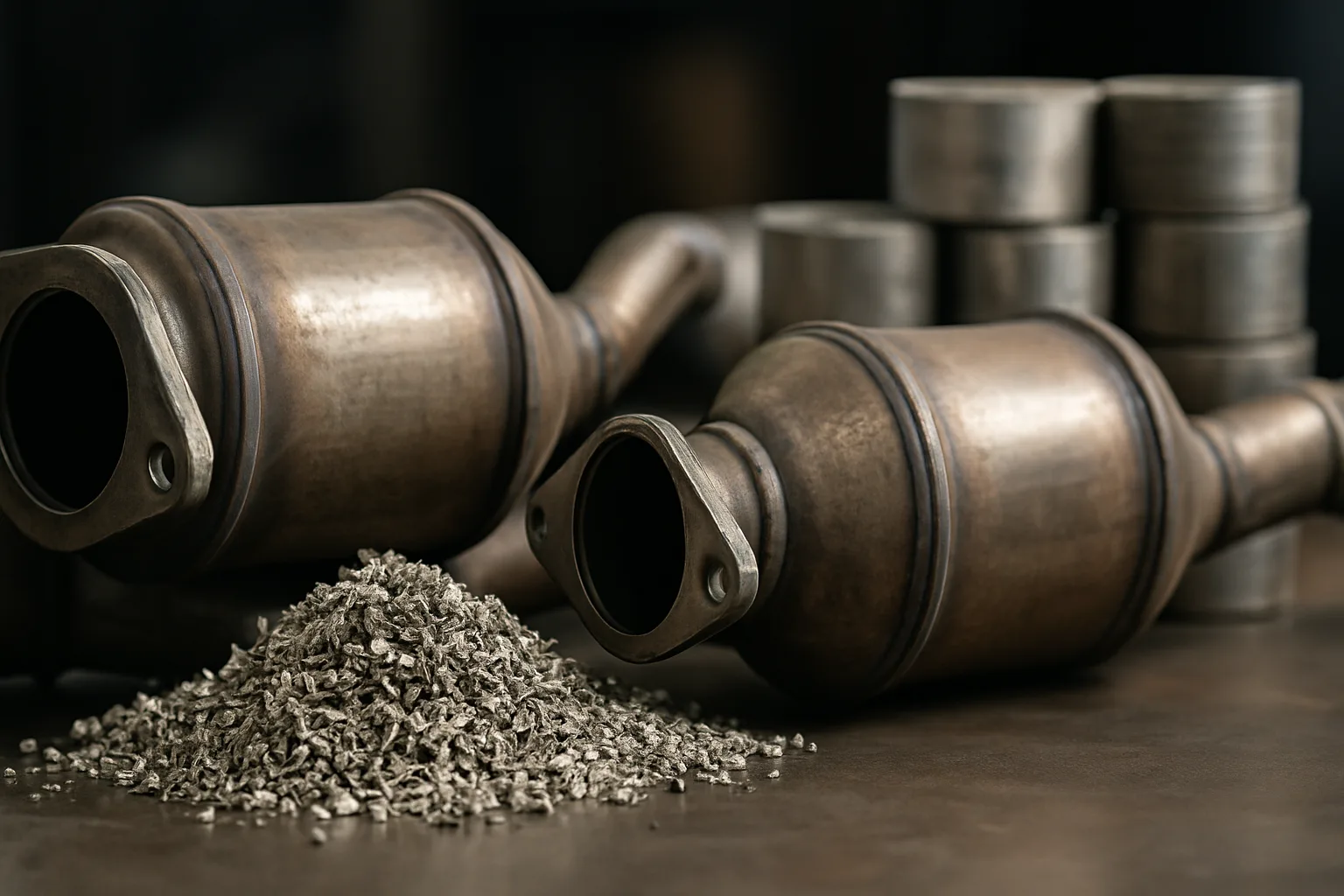
Most auto shops leave serious money on the table when they sell scrap catalytic converters. Not because the market is bad — but because they sell to one buyer, take the first number they hear, and never know if it was fair. If your shop pulls converters regularly, that habit compounds into real losses over months and years.
This guide is built for shops that want to do it smarter. Whether you're running a busy repair shop in Cleveland, managing a fleet service operation, or pulling cats from trade-ins across Ohio, these tips will change how you think about catalytic converter scrap value and what you're actually owed.
1. Understand What Drives Catalytic Converter Scrap Value
Before you sell anything, know what you're sitting on. Catalytic converter scrap value isn't arbitrary — it's tied directly to the precious metals inside: platinum, palladium, and rhodium. These metals trade on global commodities markets, and their prices shift daily. When palladium price today is running high, your cats are worth more. When it dips, margins compress across the board.
Different converters carry different metal loadings. A domestic large GM cat isn't worth the same as a foreign small import cat. Pre-cats, direct-fit aftermarkets, and OEM units all pull different numbers. Knowing these categories — even roughly — lets you push back on a low offer instead of accepting it blind.
- Platinum (Pt): Common in diesel and older gasoline converters
- Palladium (Pd): High concentration in modern gasoline cats — often the biggest value driver
- Rhodium (Rh): Found in smaller quantities but extremely valuable per gram
- Ceramic vs. foil substrate: Foil-core converters process differently and are priced accordingly
Bottom line: the more you understand your inventory, the harder it is for a buyer to lowball you. You don't need a chemistry degree. You need enough knowledge to ask the right questions.
2. Sort and Document Your Inventory Before You Sell
Dumping a mixed pile of cats in front of a buyer and accepting a blended average is one of the most expensive mistakes a shop can make. High-value converters get buried in that average. You end up subsidizing the buyer's upside with your losses.
Sort your converters by type before any sale. At minimum, separate domestic from foreign, large from small, and intact from damaged (cracked, gutted, or aftermarket). Take photos of each unit. Log the serial numbers or part numbers where visible — this is exactly the kind of documentation that gives buyers more confidence and supports better price discovery.
Platforms like North America's B2B scrap metal auction platform SMASH support serial tracking and photo documentation specifically because documented inventory consistently attracts more serious buyers and cleaner bids. When buyers know what they're getting, they bid with confidence instead of padding their offer for unknown risk.
- Photograph both ends of each unit — inlet and outlet
- Note any visible damage, cracks, or missing heat shields
- Keep pre-cats separate from main cats — they have different values
- Flag any aftermarket units clearly — buyers price them differently
3. Know Why Bulk Selling Requires a Different Strategy
Selling one or two cats is a transaction. Selling bulk converters — loads of 50, 100, 200 units — is a negotiation. The stakes are different, and so is the leverage. A single buyer calling on your shop has no incentive to offer market value. They have every incentive to offer as little as you'll accept.
Bulk volume is actually your advantage, not theirs. More converters means more interest from serious processors. More interest means competition. Competition is what moves price. That's not a theory — it's how any functioning market works. When you sell catalytic converters online through an auction-format platform, you're not hoping one buyer is honest. You're letting multiple vetted buyers compete for your load.
Auto shops in Cleveland and across Ohio that run consistent monthly volume are especially well-positioned to benefit from this model. Recurring bulk loads attract recurring serious buyers. That relationship has real value — and it starts with your first properly documented, competitively sold load.
4. Stop Relying on Word-of-Mouth Cat Converter Buyers
The phrase "cat converter buyers near me" gets searched constantly — and for good reason. Local buyers are convenient. But convenient isn't the same as competitive. A buyer who shows up at your shop, buys your cats over a handshake, and writes you a check is offering you one data point. One data point isn't a market.
That doesn't mean local relationships are worthless. It means they should be tested against the market periodically. If your local buyer's prices hold up under competitive pressure, keep working with them. If they don't, you have your answer — and you have options.
To check current scrap converter prices against what you're being offered, you need transparent market access. SMASH provides exactly that — an auction format with vetted buyers who know what they're bidding on and compete accordingly. No subscription fees. No guessing. You list your load, buyers bid, and the market speaks.
5. Time Your Sales Around Precious Metal Market Conditions
You don't need to day-trade rhodium to make smarter timing decisions. But ignoring the market entirely costs you. Palladium, platinum, and rhodium prices move in cycles. Macro factors — automotive production slowdowns, mining supply disruptions, currency shifts — drive real price swings that flow directly into converter scrap value.
Build a basic habit: check precious metal spot prices before you commit a large lot. If palladium is at a multi-month high, that's worth knowing before you accept a fixed-price offer. If the market is soft, you might hold a smaller lot and add to it rather than selling at the bottom. This isn't speculation — it's basic awareness that any informed seller should have.
For shops in Ohio running steady monthly volume, even modest improvements in timing decisions can add up over a year. A few percentage points on a load worth several thousand dollars is real money. It's also the kind of advantage that compounds when you combine it with competitive selling rather than single-buyer transactions.
Disclaimer: Precious metal prices fluctuate daily based on global market conditions. Always read scrap converter pricing guides and check current spot prices before finalizing any sale. No platform or buyer can guarantee a specific return.
6. Use the Right Platform to Sell Catalytic Converters Online
Not all online selling options are equal. Some platforms are essentially glorified lead forms that route your inquiry to a single buyer. Others run actual competitive auctions with multiple vetted participants. The difference in outcomes between these two models can be significant — especially on bulk loads.
When you sell catalytic converters online through SMASH, you're working with a platform built specifically for scrap and recycling transactions. Vetted buyers. Auction format. Auto-invoicing. Photo documentation and serial tracking baked into the process. No subscription fees — SMASH only wins when the seller wins.
Cleveland-area shops can access Cleveland scrap metal services through the platform, connecting with buyers who are active in the regional market and understand Ohio's volume patterns. That local market context matters when buyers are pricing loads — and it's something a national generic platform won't give you.
If you want to find the best scrap converter prices today, the path is straightforward: document your inventory properly, list it where buyers compete, and let the market do the work. That's not a complicated strategy. It's just the one that actually works.
Frequently Asked Questions
Q: How do I know if I'm getting a fair catalytic converter scrap value for my bulk load?
Fair value is established through competition, not trust. If you're selling to a single buyer with no competing offers, you have no way to verify whether the price is market-accurate. The most reliable method is to list your load on an auction-format platform where multiple vetted buyers bid against each other. That process reveals the market — it doesn't guess at it.
Q: Does palladium price today affect what I get paid for my cats?
Yes, directly. Palladium is one of the primary precious metals in gasoline catalytic converters, and its spot price is a core input in how processors value your load. When palladium runs high, converters are worth more. When it drops, values follow. Checking spot prices before committing a large lot is a smart basic habit for any shop selling bulk converters.
Q: What's the best way to sell catalytic converters in Ohio as a shop?
Ohio shops with consistent monthly volume are well-positioned to benefit from competitive selling rather than single-buyer transactions. Sort and document your inventory, photograph each unit, and list through a platform like SMASH where buyers compete. Shops in Cleveland and across Ohio can access regional buyers through structured auction formats rather than relying on whoever calls first.
Q: Should I sort my converters before selling, or is a mixed lot fine?
Sort them. A mixed lot forces buyers to price for the lowest-common-denominator or hedge against unknown units. Separated, documented inventory — domestic vs. foreign, large vs. small, intact vs. damaged — gives buyers confidence to bid higher on the units that deserve higher bids. You stop subsidizing the low-value units with your high-value ones.
Q: How many converters do I need before it makes sense to use an online platform?
There's no hard minimum, but bulk loads — generally 20 units or more — tend to generate the most competitive interest on auction platforms. Smaller lots can still benefit, especially if they contain high-value foreign or specialty units. Document what you have, photograph it properly, and let the market tell you what it's worth. The documentation step alone improves outcomes regardless of volume.
If your shop is pulling converters regularly and still selling to the first buyer who calls, you're leaving money on the table every single month. The process isn't complicated — sort your inventory, document it properly, and put it in front of multiple vetted buyers who compete for your load. That's how competitive price discovery actually works. When you're ready to stop guessing and start selling smarter, find the best scrap converter prices today at best-scrap-converter-prices.com.
Stay current on precious metal markets and scrap converter pricing — follow SMASH on LinkedIn for industry updates and market insights that matter to your bottom line.
```