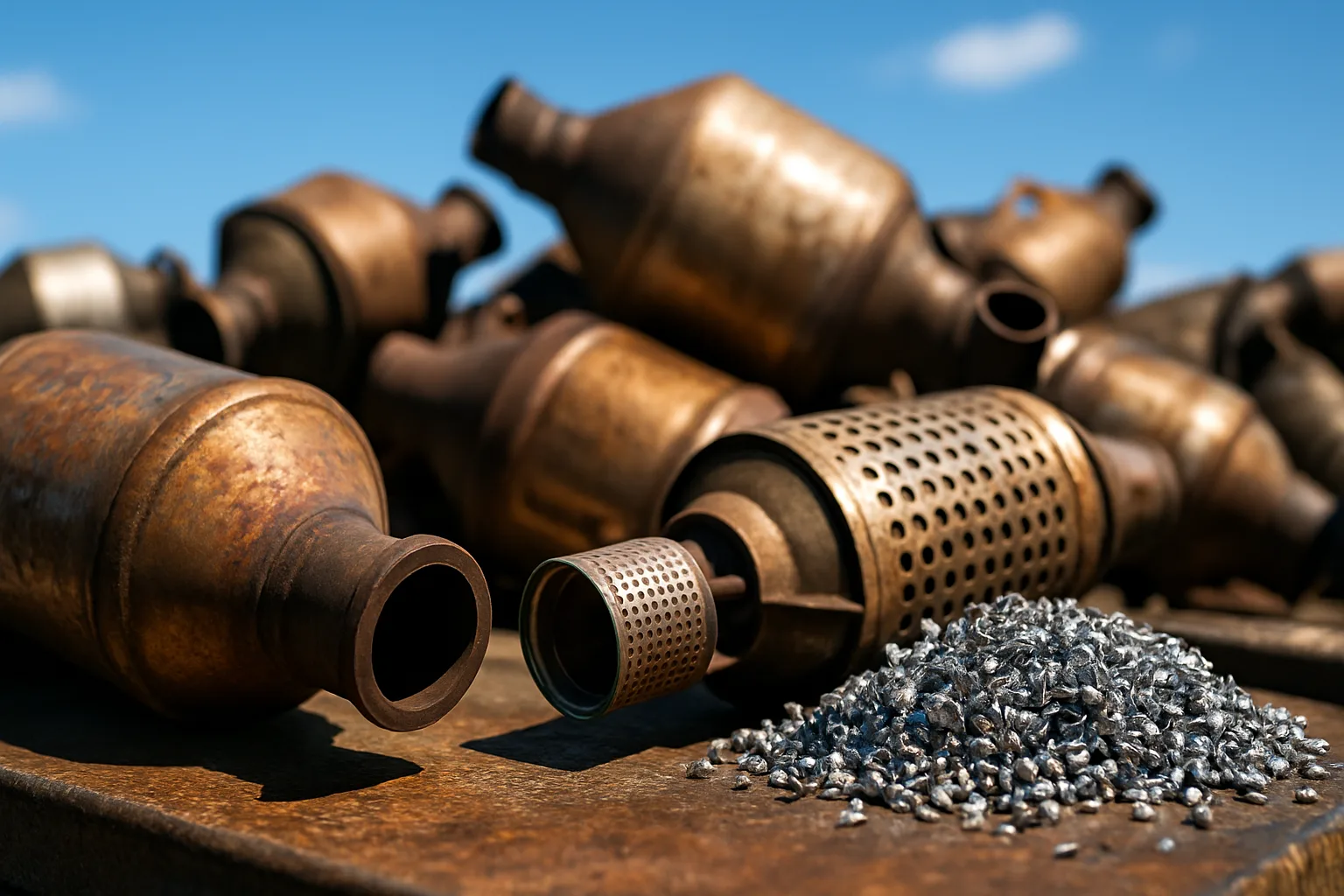
Why Your Phone Photos Are Costing You Money on Catalytic Converter Quotes
Here's something most yards won't tell you: a blurry photo of your catalytic converter can cost you real money. Buyers can't read a partial serial number from a dark, angled shot. So they quote low — or don't quote at all. If you're trying to get the best catalytic converter price in Fort Wayne, the difference between a good photo and a bad one can be the difference between a fair offer and a lowball.
This isn't theoretical. Converter scrap value is tied directly to precious metal content — platinum, palladium, and rhodium. Buyers need to identify your exact unit to price it accurately against live market data. That identification starts with your photos. Get the documentation right, and you're not guessing anymore.
What Buyers Actually Look At When Pricing Your Converter
Before you grab your phone, understand what matters to a serious converter buyer. They're not admiring your photography. They're trying to extract specific data points that connect your unit to a known precious metal profile.
The three things buyers need to confirm:
- Serial number or OEM stamp — This is the primary identifier. It links your converter to a database of known PGM (platinum group metal) content.
- Physical condition — Rattling substrate, crushed body, missing end caps, or torch cuts all affect value. Buyers need to see the unit clearly.
- Converter type — Foil, bead, ceramic, DPF. Each type has different pricing logic. A diesel particulate filter prices very differently than a standard ceramic cat.
When rhodium price today is swinging — and it does, sometimes significantly week over week — buyers are especially careful about misidentification. A wrong ID in a high-rhodium environment means a costly error. That's why documented, clear photos aren't just helpful. They're required for an accurate quote from any serious platform.
Step-by-Step: How to Photograph Your Catalytic Converter for an Accurate Quote
You don't need professional equipment. A modern smartphone in decent light does the job. What you need is a system. Follow these steps every time, and your quote accuracy will improve significantly.
Step 1 — Clean the Serial Number Area First
Grease, road grime, and carbon buildup obscure stamped numbers. Use a wire brush or rag to clean the area around the serial stamp before you shoot. A readable serial number is worth more than any filter or editing you could do afterward. Take an extra 60 seconds here — it pays off.
Step 2 — Shoot in Natural Light, Not Flash
Flash creates glare on metal surfaces and wipes out stamped characters. Take your converter outside or near an open bay door. Overcast daylight is actually ideal — it's diffused and shadow-free. Direct midday sun can also create harsh shadows in stamped recesses, so shade or cloud cover often works best.
Step 3 — Take a Serial Number Close-Up First
Get the phone 4–6 inches from the serial stamp. Fill the frame with the number. Tap to focus. Shoot multiple frames. This single photo is the most valuable image in your set — don't rush it. If the number isn't readable when you zoom in on your phone screen, reshoot before moving on.
Step 4 — Full-Body Shot from Both Ends
Photograph the converter from each end and from both sides. This gives buyers a complete physical picture — they can assess substrate condition, body damage, and end cap integrity. If there's a rattle, note it in your submission. Buyers factor substrate damage into their offer.
Step 5 — Photograph Any Additional Markings
Some units carry secondary stamps, OEM part numbers, or country-of-origin codes. These can help buyers cross-reference identification when the primary serial is worn or partially obscured. Don't skip the ends of the unit — converters from certain manufacturers stamp critical data on the flanges.
Step 6 — Document the Lot if You Have Multiple Units
If you're selling a load — common for yards moving inventory in bulk — photograph each unit individually before grouping. Then shoot the full lot laid out flat. Platforms like SMASH scrap metal auction support per-unit serial tracking, which means your documentation directly supports competitive bidding from vetted buyers. A documented lot moves faster and prices better than a mystery pile.
Common Photo Mistakes That Kill Your Quote Accuracy
Even experienced sellers make these errors. Run through this checklist before you submit anything.
- Serial in shadow. The most common problem. Flip the unit or change your angle until the stamp is lit.
- Photo taken at too steep an angle. Stamped characters distort when shot at an angle. Shoot straight on, perpendicular to the surface.
- Blurry close-up. Tap to focus. Wait for the camera to lock before shooting. On most phones, a small square or circle appears when focus is confirmed.
- Only one photo submitted. One photo tells a buyer almost nothing. A full set — serial, full body, both ends — tells the whole story.
- No scale reference on DPFs. Diesel particulate filters vary enormously in size and weight. Include something for scale, or weigh the unit and note it in your submission.
- Photos taken after cleaning with water. Wet metal surfaces create glare. Let the unit dry before shooting.
Fort Wayne yards move a significant volume of converter inventory — fleet service, auto recyclers, independent collectors. The yards that get better offers consistently are the ones submitting complete photo documentation with every load. It's not luck. It's process.
How Platforms Like SMASH Turn Good Documentation Into Better Prices
Here's where photo quality connects directly to dollars. When you submit a well-documented converter — clear serial, clean photos, unit condition noted — vetted buyers can price it with confidence. Confident buyers bid higher. That's how competition works.
On North America's B2B scrap metal auction platform, sellers upload inventory with photo documentation and serial tracking. Multiple buyers see the same unit. They compete. Price discovery happens in real time, tied to live scrap metal prices today — not a single buyer's margin assumption. That's the structural difference between calling one buyer and letting multiple buyers compete for your load.
No subscription fees. SMASH only wins when the seller wins. More buyers means better price discovery — and better price discovery starts with documentation buyers can actually use.
If you're in Fort Wayne or anywhere across Indiana, this matters whether you're moving one converter or a pallet of mixed cats. The process scales. The documentation standard stays the same.
The Case for Making Documentation Your Standard Operating Procedure
Think about what consistent documentation does over time. Every unit you photograph and track builds a record. You know what you sold, what it was, and what it paid. When scrap metal prices today shift — when palladium dips or rhodium spikes — you have historical data to compare against. You're not flying blind.
For sellers looking to find the best scrap converter prices today, documentation is the foundation. You can't negotiate from strength if you don't know what you have. A clear photo of a readable serial number, cross-referenced against a live pricing database, gives you that foundation.
Yards in markets like catalytic converter recycling San Marcos, sell catalytic converter Houston networks, and industrial recyclers in Indiana are all moving toward documented inventory as a baseline expectation. Buyers are selecting for it. Platforms are built around it. If you're still submitting one blurry photo and hoping for a fair offer, you're competing at a disadvantage.
To check current scrap converter prices and understand what your documentation is worth in today's market, start with the photo process above. It takes less time than you think, and it pays back more than most sellers expect.
Want to go deeper on pricing strategy? Read scrap converter pricing guides to understand how precious metal spot prices affect your converter's value day to day — and how to time your sales accordingly.
Whether you're clearing out a single unit or moving a full load out of Fort Wayne, the process is the same: document it right, submit it to competitive buyers, and let the market price it fairly. That's how you stop guessing and start selling with confidence.
Disclaimer: Catalytic converter prices fluctuate with precious metal markets. Always verify current rates before finalizing any sale.
Frequently Asked Questions
Q: How many photos do I need to get an accurate catalytic converter quote in Fort Wayne?
At minimum, submit a clear close-up of the serial number, a full-body shot from both sides, and a photo of each end of the unit. That's 4–5 photos per converter. More is better if the unit has unusual markings or damage. Buyers in Fort Wayne and across Indiana use these images to identify the unit and price it accurately against current precious metal data.
Q: Does a dirty or damaged catalytic converter still get quoted accurately from photos?
Yes, but clean the serial number area first regardless of overall condition. Buyers can price damaged units — crushed bodies, rattling substrates, torch cuts all factor into the offer. What they can't work with is an unreadable serial. Condition notes in your submission also help buyers price more accurately rather than defaulting to a conservative estimate.
Q: How does the rhodium price today affect what I get for my catalytic converter?
Rhodium is one of the three platinum group metals recovered from catalytic converters, alongside platinum and palladium. When rhodium spot prices rise, converters with high rhodium content — typically from certain European and luxury vehicles — become significantly more valuable. Submitting accurate documentation lets buyers price your specific unit against live market data rather than a generic average.
Q: What's the best catalytic converter price I can realistically get in Fort Wayne?
Converter scrap value varies widely by unit type, precious metal content, and current spot prices. Common domestic cats may fetch modest returns, while high-content units from certain manufacturers can pay significantly more. The best way to get a competitive offer is through documented submission to a platform where multiple vetted buyers can see your unit and compete — not a single phone call to one buyer.
Q: Can I sell catalytic converters online if I'm based in Indiana?
Yes. Platforms like SMASH connect sellers across North America — including Indiana — with vetted buyers through a documented auction process. You submit photos and serial data, buyers compete, and you get a market-driven offer. It's a more transparent process than calling around locally, and it doesn't require a subscription to get started.
Ready to put your documentation to work? If you've got converters to move and want competitive offers based on real market data, start at best-scrap-converter-prices.com — get a free quote and see what your inventory is actually worth today.
Follow SMASH on LinkedIn for industry updates, scrap metal market insights, and converter pricing news as precious metal markets move.
```