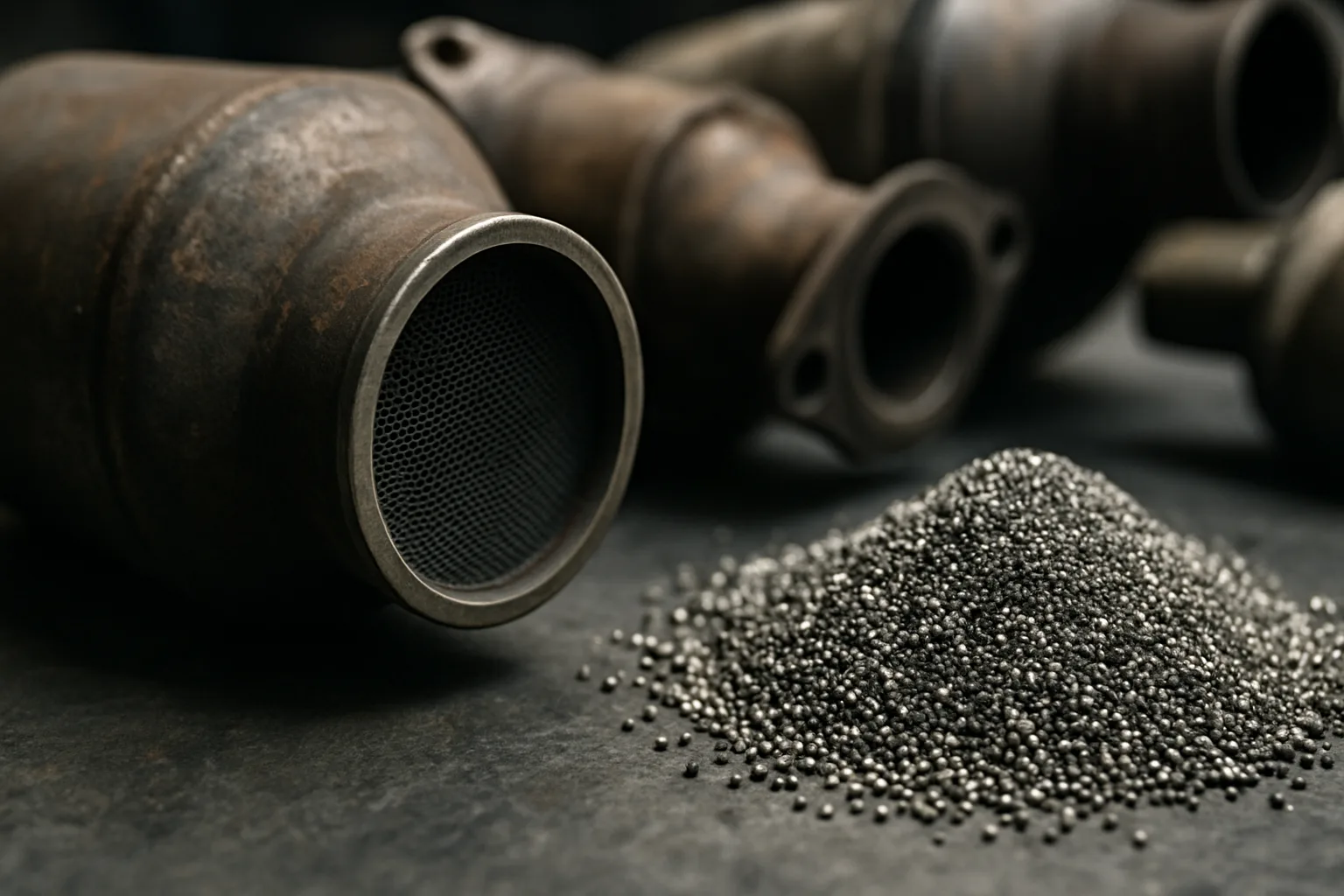
Most people have no idea what happens to a catalytic converter after it leaves a vehicle. They pull it off, maybe get a quote from a local yard, and that's where their knowledge ends. But the journey from exhaust system to refined precious metal is longer — and more valuable — than most sellers realize. Understanding that journey helps you make smarter decisions about who you sell to, when you sell, and how much you should expect to get.
If you're a catalytic converter buyer Toledo seller is searching for, or a recycler trying to understand how your converter fits into the global supply chain, this breakdown is for you. The more you know about where your converter ends up, the better equipped you are to find the best scrap converter prices today.
Step One: Removal and Initial Assessment
It starts at the vehicle. Whether a car has been totaled, junked, or simply reached the end of its road, the catalytic converter is one of the first components targeted during dismantling. Why? Because it contains platinum group metals — platinum, palladium, and rhodium — that hold real, measurable value tied directly to commodity markets.
After removal, a converter goes through an initial assessment. Experienced buyers and recyclers look at a few key factors right away:
- Make, model, and year of the vehicle — different vehicles use different catalyst loadings
- Physical condition — intact substrate vs. rattled, crushed, or damaged units
- Serial number or part number — this is how buyers identify the specific unit and its approximate precious metal content
- Aftermarket vs. OEM — original equipment converters typically carry more precious metal than aftermarket replacements
In Toledo, Ohio, where automotive manufacturing and vehicle dismantling have deep roots, this initial sorting process happens at scale. Yards processing high volumes of converters move quickly through this step — which is exactly why documentation matters so much to buyers downstream.
How Scrap Metal Prices Today Drive Converter Value at Every Stage
Here's what most casual sellers miss: your converter's scrap value is not a flat number. It moves with the precious metals market, specifically the spot prices for platinum, palladium, and rhodium. When palladium spikes, certain converter types become significantly more valuable. When rhodium softens, the same unit might fetch less than it did the month before.
This is why quoting a "standard price" for converters is misleading. Any honest buyer ties their offer to current commodity data. Check current scrap converter prices before you call a yard — walking in with market awareness puts you in a much stronger negotiating position.
Globally, this price sensitivity is significant. Markets in North America, Europe, and Asia all watch platinum group metal prices closely. You may have seen references to a used catalytic converter price in India or a catalytic converter scrap price Ontario — those numbers reflect the same underlying commodity markets, just filtered through local demand, regulation, and refining infrastructure. For U.S. sellers, particularly those in Ohio, the relevant benchmark is the North American processing market, not overseas spot comparisons.
The bottom line: scrap metal prices today are the engine driving converter value at every point in the lifecycle. Staying current on those numbers is not optional — it's how you protect yourself from lowball offers.
The Sorting and Grading Process — Where Most Sellers Lose Money
Once a converter reaches a recycler or processor, it gets sorted and graded. This is the stage where sellers who don't document their inventory leave real money on the table.
Processors use a combination of physical inspection, serial number databases, and XRF (X-ray fluorescence) analysis to determine precise precious metal content. High-grade units go into premium pricing tiers. Damaged, rattled, or unidentified converters get grouped into lower-value "mixed" or "toll" categories — even if the actual metal content is higher.
This is a systemic problem in the industry. A yard that can't document what they're selling gets treated as a lower-value seller by processors. Platforms like find the best price for your scrap on SMASH address this directly — by helping sellers catalog converters with serial tracking and photo documentation, they create a verified record that buyers trust. That trust translates into better offers and faster transactions.
For Toledo-area yards and individual sellers, proper documentation isn't just good practice — it's a competitive advantage. If you're not tracking serial numbers and condition, someone else is getting credit for doing it better than you.
Catalytic Converter Recycling Toledo — What Happens at the Processing Stage
After sorting, the real extraction process begins. This is catalytic converter recycling at the industrial level. The converter's ceramic or metallic substrate — the honeycomb-structured core coated with precious metals — gets separated from the steel shell (the "can"). The substrate is then processed through one of two main recovery methods:
- Smelting — The substrate is melted down at extremely high temperatures, and precious metals are separated through metallurgical processes. This is the dominant method for high-volume processing.
- Hydrometallurgical processing — Chemical leaching extracts platinum group metals at lower temperatures, often used for specific substrate types or smaller operations.
Both processes yield refined platinum, palladium, and rhodium that re-enter global commodity markets. Those metals end up in new catalytic converters, electronics, medical devices, and industrial applications. Nothing goes to waste — which is exactly why the recycling economics work so well when the supply chain is functioning properly.
Catalytic converter recycling in Toledo feeds into a regional network of processors and refiners operating across the Midwest. Ohio's industrial infrastructure makes it a natural hub for this kind of materials recovery. If you're involved in Toledo scrap metal services, you're part of a supply chain that ultimately serves global precious metal demand.
Where the Market Is Heading in 2026 — and What It Means for Sellers
The converter recycling market in 2026 looks meaningfully different than it did just a few years ago. A few trends are reshaping the landscape for sellers in Ohio and across North America:
Electric vehicle adoption is accelerating. As EVs displace internal combustion engines, the long-term supply of used catalytic converters is projected to tighten. Fewer new ICE vehicles means fewer converters entering the recycling stream over time. This is a gradual shift — millions of converters still exist in the vehicle fleet — but it's worth understanding as a backdrop to current market dynamics.
Regulatory scrutiny on converter theft has intensified. Most U.S. states, including Ohio, have implemented or strengthened laws requiring documentation of converter sales, particularly from individual sellers. Serial number verification and seller ID requirements are now standard in many jurisdictions. This raises the cost of doing business for bad actors, but it also means legitimate sellers benefit from cleaner, more transparent markets.
Price discovery tools are improving. Sellers who previously relied on a single phone call to one buyer now have options. Auction platforms and digital marketplaces have created genuine competition for converter loads, which helps reveal real market value rather than a single buyer's margin-protected offer. That's the problem SMASH was built to solve — and why it matters to sellers who want transparent pricing rather than guesswork.
Want to stay ahead of market shifts? Read scrap converter pricing guides that track current trends and help you understand what your inventory is actually worth.
How to Get the Best Converter Price as a Seller in Toledo
Understanding the lifecycle is useful context, but what you really want to know is: how do I get the best price for my converters right now? Here's what works in practice for sellers in the Toledo area:
- Document before you sell. Photograph each unit. Record the serial number or part number. Note the vehicle it came from. This documentation gives buyers confidence and supports better offers.
- Know your serial numbers. A known, identified converter almost always commands a better price than an "unknown" unit. Use lookup tools to identify what you have before calling buyers.
- Get multiple quotes. One phone call to one buyer is not price discovery. It's guessing. Competition among buyers is how you find out what your converters are actually worth.
- Understand market timing. Precious metal prices move. Selling into a rising palladium market versus a soft one can make a meaningful difference on large loads.
- Use platforms built for competition. SMASH puts vetted buyers in direct competition for your inventory — no subscription fees, no guesswork. You only pay when you sell.
The old way — calling one buyer, accepting their number, moving on — leaves value on the table every time. The market has better tools now. Use them.
Frequently Asked Questions
Q: How do I find a reliable catalytic converter buyer in Toledo?
Look for buyers who ask for serial numbers, document transactions properly, and can explain how they price units based on current precious metal markets. In Ohio, legitimate buyers follow state documentation requirements — if a buyer isn't asking for ID or serial numbers, that's a red flag. Platforms like SMASH connect you with vetted buyers who operate transparently.
Q: What affects the scrap price of my catalytic converter in Toledo?
Three main factors drive converter scrap value: the precious metal content of your specific unit (determined by make, model, year, and OEM vs. aftermarket), the current spot prices for platinum, palladium, and rhodium, and the physical condition of the substrate. A damaged or rattled converter loses significant value because the precious metal content is reduced or unverifiable.
Q: Is catalytic converter recycling legal in Ohio?
Yes — legal recycling of catalytic converters is well-established in Ohio, but state law requires documentation of converter sales, including seller identification and serial number recording. These regulations are designed to combat converter theft. If you're selling legitimately, the paperwork is straightforward and protects both you and the buyer.
Q: How many converters do I need before it's worth selling?
There's no strict minimum, but larger loads typically attract more buyer interest and stronger offers. Even a single high-value OEM converter from a premium vehicle can be worth selling through a competitive platform. If you accumulate inventory regularly, batching your converters and selling through an auction format often yields better results than selling one at a time to a local yard.
Q: Why do converter prices vary so much between buyers in Toledo?
Because most buyers price converters based on their own margin targets, not just market value. A single-buyer transaction gives the buyer all the negotiating leverage — they know their data, you may not know yours. Getting competing offers through a platform like SMASH is the fastest way to cut through that information gap and see what your converters are actually worth on an open market.
If you're ready to stop guessing and start selling with real market data behind you, it's straightforward — visit best-scrap-converter-prices.com for a free quote and find out what your converters are actually worth today.
Follow SMASH on LinkedIn for ongoing industry updates, scrap metal market insights, and converter pricing news you can actually use.
```