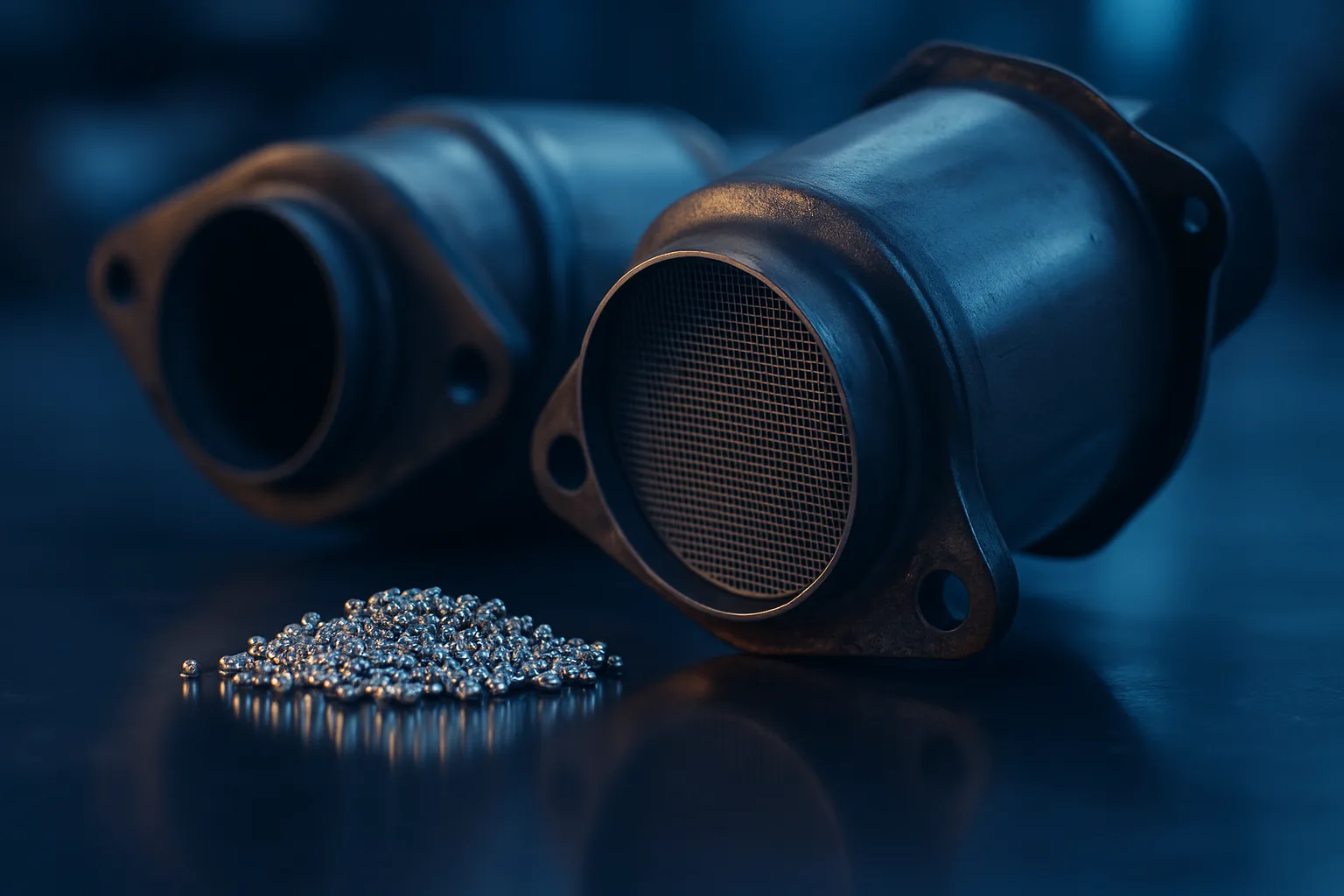
One converter off a Ferrari could be worth more than a week's worth of work. That's not hype — that's rhodium, palladium, and platinum doing what they do. And in 2026, knowing which vehicles carry the most valuable catalytic converters isn't just trivia. It's money in your pocket.
The rhodium price today continues to drive massive variation in converter scrap value. Rhodium is rare, it's industrial, and certain OEM catalytic converters are loaded with it. If you're sitting on a pile of cats without knowing what you have, you're leaving real money on the table — especially here in Columbus and across Ohio, where recycling volume runs high.
This guide breaks down which vehicle makes and models consistently produce the highest-value converters, what drives that value, and how to make sure you get paid what your inventory is actually worth. Before you sell anything, check current scrap converter prices so you know what the market looks like right now.
Why Rhodium Price Today Determines Converter Value More Than Anything Else
Three precious metals live inside a catalytic converter: platinum (Pt), palladium (Pd), and rhodium (Rh). All three matter. But rhodium is the wildcard. Its price swings harder than the other two, and even small amounts of rhodium dramatically shift the scrap value of a converter.
OEM catalytic converters — the ones that came stock on the vehicle — tend to carry heavier precious metal loadings than aftermarket replacements. That's the core reason why OEM catalytic converter value is so much higher when you're selling for scrap. A cheap replacement cat might barely register. An original factory unit from a performance vehicle or a luxury brand? Completely different story.
Here's what drives converter scrap value in 2026:
- Precious metal content — rhodium, palladium, and platinum concentrations in the substrate
- Substrate condition — intact honeycomb, no melted core, no missing material
- OEM vs. aftermarket — factory units carry more PGMs (platinum group metals)
- Vehicle engine type — larger engines, more cylinders, often more converter surface area
- Number of converters per vehicle — some vehicles run two, three, or four cats
Keep that list in mind as we go through the makes and models below. These aren't random picks — they're vehicles that consistently produce high-returning converters based on their PGM loading and OEM specs.
The Most Valuable Catalytic Converters by Vehicle Make and Model
Not every converter is created equal. Here's a ranked breakdown of the vehicle categories and specific makes and models known to carry the highest converter scrap value. Serial numbers and VIN lookups matter here — platforms like North America's B2B scrap metal auction platform use serial tracking to match converters to accurate values instead of guessing.
1. Ferrari and Lamborghini (Exotic/Supercar)
Exotic vehicles run multiple large-format converters with heavy rhodium and palladium loads. A single converter from a Ferrari 458 or a Lamborghini Aventador can be among the most valuable single units in any scrap yard. These are rare in volume but extraordinary in per-unit value. If you pull one, document it immediately with photos and serial numbers.
2. Ford F-250 and F-350 with 6.2L and 7.3L Gas Engines
Work trucks with large gas V8s produce substantial converter value. The 6.2L and 7.3L Ford Super Duty engines run bigger substrate systems to handle the exhaust volume. These trucks are common in Ohio and across the Midwest, making them a realistic volume play for Columbus-area recyclers — not just a fantasy number from an exotic car.
3. Toyota Prius (All Generations)
The Prius is one of the most well-known high-value converters in the scrap industry — and for good reason. Because the gasoline engine runs inconsistently in a hybrid cycle, Toyota engineered the Prius converter with elevated precious metal content to ensure emissions compliance under irregular combustion patterns. The result is a converter that recyclers have long recognized as a premium unit. Serial tracking matters here because there are many Prius generations with different value tiers.
4. Dodge Ram 2500 / 3500 with HEMI Engines
HEMI-powered Ram trucks carry two converters in many configurations. Two OEM units from a 5.7L or 6.4L HEMI equals two chances to recover strong PGM value. These are workhorses across Ohio — not hard to source if you're running a recycling yard or buying end-of-life vehicles in the Columbus market.
5. BMW and Mercedes-Benz (Luxury V6 and V8)
European luxury brands engineer tight emissions tolerances, which means heavier precious metal loads in their OEM catalytic converters. BMW 5 and 7 Series, along with Mercedes E-Class and S-Class V8 configurations, consistently return strong converter scrap values. The substrates tend to be in good shape too, since these vehicles are often maintained well before they reach the end of their life.
6. Lexus LX and GX SUVs
Lexus SUVs with V8 Toyota-based platforms carry large-format converters similar in value to their Land Cruiser counterparts. These are durable vehicles that stay on the road for a long time, but when they finally come in, the converters often reflect their premium OEM specifications.
7. Chevrolet Silverado and GMC Sierra with 6.2L V8
The 6.2L LS-based V8 in full-size GM trucks runs a converter setup that holds solid scrap value. These are among the most common trucks on Ohio roads, which means volume is realistic for any recycler working the Columbus market and surrounding areas.
How to Identify What You Have Before You Sell
Visual inspection alone won't tell you what a converter is worth. You need to match it to the right data. That means using the serial number stamped on the unit, the vehicle VIN, or both. Many converters look similar on the outside but vary significantly in PGM loading based on the engine configuration they were built for.
Here's a practical workflow for identifying converter value before you sell:
- Pull the serial number — it's stamped or embossed on the converter housing
- Cross-reference with a VIN lookup — match the converter to the vehicle's engine and trim level
- Document condition with photos — intact substrate, no visible rattling or damage
- Check whether it's OEM or aftermarket — aftermarket units typically return significantly less
- Get a market-based quote — not a flat rate from a single buyer
Skipping these steps is how yards leave money behind. A converter that looks ordinary might be a high-tier Prius unit or a factory BMW unit worth multiples of what a quick visual guess would suggest. If you want to find the best scrap converter prices today, accurate identification is the first step.
Sell Scrap Metal Online: Why Competitive Bidding Beats a Single Phone Call
The old way of selling converters goes like this: one buyer, one offer, take it or leave it. That buyer has no incentive to push the number up. You have no leverage. You take what you're given and move on.
That model is broken. The rhodium price today doesn't change based on who calls you first. The precious metal content in your converters doesn't shift based on whether you have one buyer or ten. What changes is your ability to recover that value — and that depends entirely on competition.
SMASH runs a vetted buyer network and auction-format sales that put your converter inventory in front of multiple qualified buyers at once. That's how price discovery actually works. More buyers bidding means the number reflects the real market — not one buyer's margin target. For Columbus recyclers and Ohio yards looking to sell catalytic converters in Ohio, this format levels the playing field that single-call selling never could.
Platforms like SMASH also handle photo documentation, serial tracking, and auto-invoicing — so the paperwork that slows down a sale gets handled in the background. You focus on the material. The platform handles the process. Read scrap converter pricing guides to understand how auction-based pricing compares to traditional buying models.
No subscription fees. SMASH only wins when the seller wins. That alignment matters when you're moving serious volume.
Columbus Scrap Yards: What to Know About the Local Market
Columbus sits in a strong position for converter recycling. Central Ohio has significant automotive traffic — dealers, fleet operators, auto salvage, and independent recyclers all generate converter volume across the region. Ohio's industrial base means the material is there. The question is always whether local sellers are recovering full market value or accepting discounted offers from buyers who know the seller has no competition.
If you're working in Columbus, you don't need to ship material across the country to access a competitive market. You need a platform that brings the buyers to your inventory — which is exactly what Columbus scrap metal services through SMASH are designed to do. Vetted buyers, documented loads, real-time pricing tied to current PGM markets including the rhodium price today.
Ohio recyclers who have moved from single-buyer relationships to competitive auction formats consistently report better price discovery. That's not a testimonial — that's basic market economics working the way it should.
Disclaimer: Converter prices fluctuate based on real-time precious metal markets including rhodium, palladium, and platinum. Always verify current rates before selling.
If you're ready to stop guessing and start getting paid based on actual market competition, it's time to find the best scrap converter prices today — and get a free quote at best-scrap-converter-prices.com.
Frequently Asked Questions
Q: Which vehicle makes have the most valuable catalytic converters in 2026?
Exotic brands like Ferrari and Lamborghini carry the highest per-unit value. In realistic volume terms, Toyota Prius, Ford Super Duty trucks with large V8s, and BMW/Mercedes luxury V8 configurations consistently produce strong OEM catalytic converter value. The rhodium price today is the biggest driver of that value — higher rhodium means these converters pay more at sale.
Q: How does the rhodium price today affect what I get paid for my converters?
Rhodium is one of three platinum group metals in a catalytic converter, and it's the most volatile in price. When rhodium prices rise, the scrap value of converters with higher rhodium loadings rises proportionally. Checking the current rhodium price before you sell — rather than accepting a flat offer — ensures your quote reflects what the market actually supports that day.
Q: Where can I sell catalytic converters in Columbus, Ohio?
Columbus has local buyers, but a single local offer isn't always the best offer. Selling through a competitive platform brings multiple vetted buyers to your material, which produces better price discovery. Check out Columbus scrap metal services to connect with buyers who price based on real-time PGM markets.
Q: What's the difference between OEM and aftermarket converter scrap value?
OEM catalytic converters are factory-original units built to meet strict emissions standards, which means they carry higher precious metal loadings. Aftermarket replacements are built to lower cost tolerances and contain significantly less PGM content. When you're selling for scrap, always identify whether a converter is OEM or aftermarket — the difference in value can be substantial.
Q: How do I know if I'm getting a fair price for my converter inventory in Ohio?
A fair price is one derived from competition, not one buyer's discretion. Use serial number tracking and VIN lookup to confirm what you have, document condition with photos, and get quotes from multiple buyers. SMASH connects Ohio recyclers with a vetted buyer network through an auction format so the price reflects the actual market — not a single buyer's margin.
Follow SMASH on LinkedIn for industry updates, PGM market insights, and scrap metal news: linkedin.com/company/scrap-metal-auction-sales-hub.