A Newark yard operator watched rhodium swing more than 30% in a single quarter — and learned exactly how that kind of move flows straight into the converter sitting on his dock. If you've ever wondered why the quote you got Monday looks nothing like the one on Friday, global precious metal markets are the answer. Understanding that connection is the difference between leaving money on the table and getting the best catalytic converter price Newark has to offer.
This is the story of how one seller figured it out — and what you can do with that knowledge today.
Why Your Converter's Value Starts in a Metals Exchange, Not a Scrap Yard
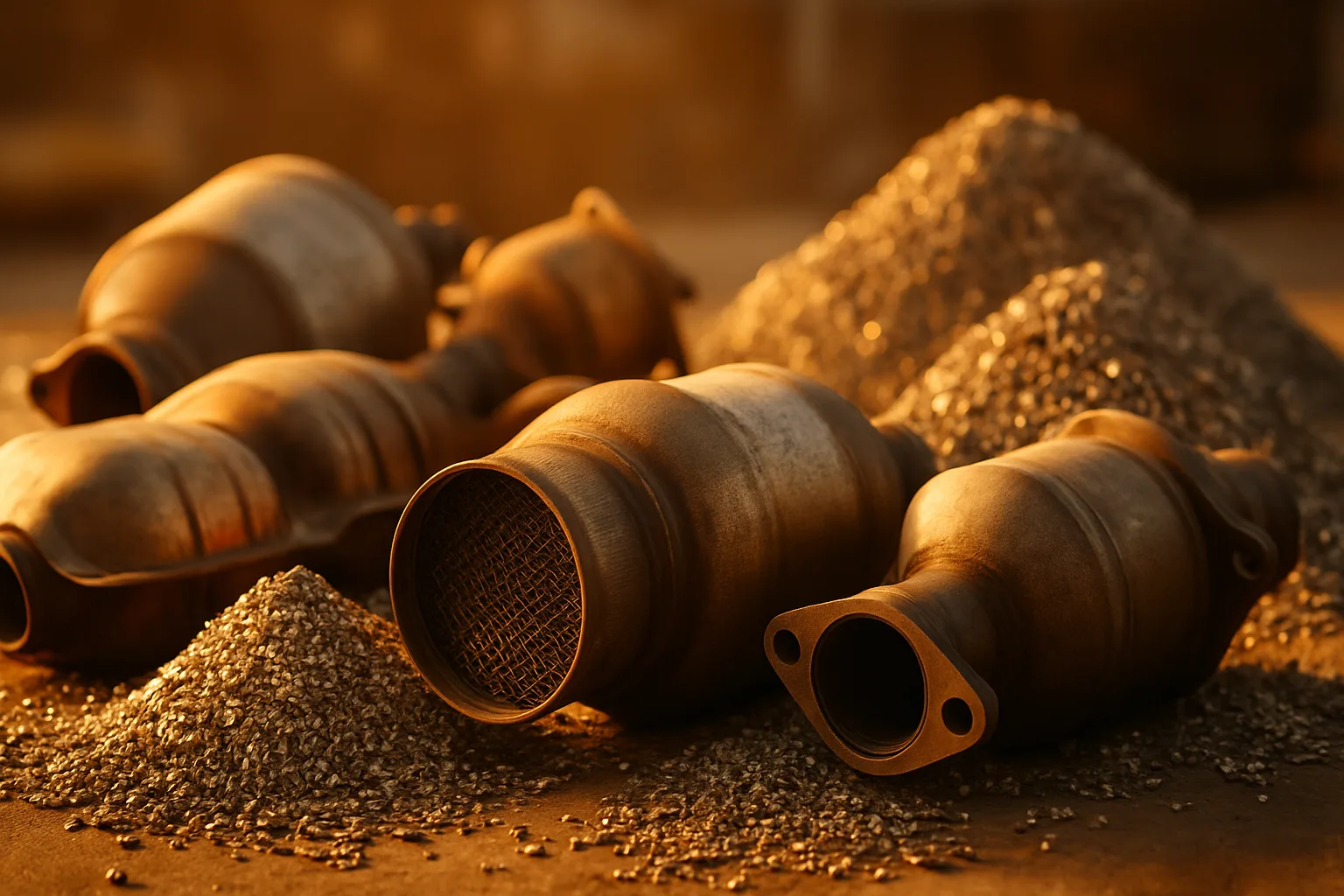
Every catalytic converter holds a cocktail of platinum group metals — platinum, palladium, and rhodium. These aren't scrap yard commodities priced on a whiteboard. They trade on international exchanges, react to mining output in South Africa and Russia, and move with currency shifts, automotive industry demand, and EV adoption forecasts. Your converter's scrap value is downstream from all of that.
When rhodium spiked to historic highs a few years back, converters that once fetched modest prices suddenly commanded serious money. When the same metal corrected sharply, sellers who didn't understand the mechanism got blindsided. The yard down the street didn't change its margin — the market moved, and so did the converter scrap price. This is why checking scrap metal prices today isn't optional — it's the foundation of any smart selling decision.
- Platinum: Used heavily in diesel converters. Tracks auto industry cycles and mine supply from South Africa.
- Palladium: Dominant in gasoline engine converters. Demand tied tightly to global car production volumes.
- Rhodium: The smallest supply, highest volatility. Even minor supply disruptions can send prices swinging hard.
The takeaway: a converter isn't a flat-rate item. It's a container of commodities priced in real time. Treat it that way.
The Case Study — A Newark Seller Learns the Hard Way
Let's call him Marcus. He runs a small dismantling operation out of Newark, New Jersey, pulling converters from end-of-life vehicles and accumulating loads before selling. For years, his process was simple: call one buyer, get a number, accept or walk away. It worked — until it didn't.
In early 2026, rhodium had been gradually climbing after a period of suppression. Marcus had a significant load ready. He called his usual contact, got a price per unit that felt reasonable, and moved the load. Two weeks later, a competitor mentioned what he'd gotten for a near-identical load in the same period. The gap was noticeable. Not catastrophic — but enough to sting.
The problem wasn't that Marcus sold at the wrong time. The problem was that he had no visibility into what the market actually supported that week. His single-buyer process gave him one data point and called it a price. That's not a price. That's a guess with someone else's margin built in.
Marcus started looking for a better approach. He found sell your scrap metal on the SMASH marketplace — and the competitive auction model changed how he thought about converter selling entirely.
How Rhodium Price Today Flows Into Your Converter Quote
Here's the mechanics that most sellers never see. When a refinery or processor buys your converter, they're essentially buying the recoverable PGM content inside it. Their offer reflects the current spot price of those metals, minus their processing margin, assay risk, and profit. The question is: how much of the current rhodium price today are they passing along to you?
With a single buyer and no competition, the answer is: as little as they can justify. That's not predatory — that's commerce. But it means your job is to create the conditions where buyers compete. When multiple vetted buyers bid on the same load, the spread between the floor and your actual return tightens. The market does the work.
This is exactly what the SMASH auction model surfaces. Vetted buyers see your documented load — accurate unit counts, photo documentation, VIN-linked inventory where applicable — and they bid knowing they're competing. The result is better price discovery, not a guaranteed number, but a result that actually reflects what the market will bear that day. Check current scrap converter prices before you move a load, so you're entering that process informed.
Key variables that shift your per-unit converter scrap value on any given week:
- Spot prices for platinum, palladium, and rhodium on the London Platinum and Palladium Market (LPPM)
- USD strength against ZAR (South African rand) — major mining currency
- Global auto production data affecting palladium demand forecasts
- Refinery throughput capacity and current processing backlogs
- U.S. regulatory activity around converter theft and documentation requirements
What Transparent Documentation Does for Your Converter Scrap Price
Marcus's second lesson was about documentation. When he started using a platform that required proper inventory — serial tracking, photo documentation, unit-by-unit records — he noticed something unexpected. His per-unit returns improved not just because of competition, but because buyers were more confident in what they were bidding on.
An undocumented load carries assay risk for the buyer. They don't know exactly what's in the box, so they build a risk buffer into their offer. A fully documented load with photos, serial numbers, and accurate unit counts removes that uncertainty. Buyers bid closer to their actual ceiling because the guesswork is gone. Documented inventory gives buyers more confidence — and that confidence flows back to you as a seller.
If you're selling in Newark or anywhere in New Jersey, this matters because the state has seen increased regulatory attention on converter documentation over the past two years. Having a proper paper trail isn't just good for your price — it protects you legally and keeps your operation clean. Local Newark scrap metal services that work within compliant documentation frameworks are positioned better in a tightening regulatory environment.
What a well-documented load looks like:
- Unit count verified against a packing list or BOL
- Photos of the load before sealing
- Serial numbers or VIN-linked records where applicable
- No mixed grades lumped together without disclosure
- Clear identification of aftermarket versus OEM units
SMASH Scrap Metal Auction — What the Competitive Model Actually Changes
The SMASH scrap metal auction model isn't about reinventing scrap selling. It's about applying a principle that works everywhere else in commerce — competition produces better prices than monopoly — to an industry that ran on handshake deals and phone calls for decades. If you've ever sold a load and wondered what you actually left behind, this is the answer.
For Marcus, the switch meant his loads went to vetted buyers who knew they weren't the only name on the table. Auto-invoicing handled the paperwork. The inventory tool kept his records clean. He wasn't spending more time on the process — he was spending the same time and getting more out of it.
The no-subscription-fee structure matters here. SMASH only wins when the seller wins. That alignment is the opposite of a system where someone is paid regardless of your outcome. When you find the best scrap converter prices today through a competitive process, you're working with a model designed to surface real market value — not protect someone else's margin.
More buyers means better price discovery. That's not a slogan. It's the mechanism. And for a Newark dismantler trying to time a sale around a rhodium move, having that competitive structure in place isn't optional — it's the edge. You can also read scrap converter pricing guides to build the market knowledge that makes timing decisions sharper.
What Newark Sellers Should Do Right Now
The precious metal markets don't wait for you to catch up. Rhodium can move significantly in a week. Palladium reacts to automotive production reports that drop without warning. If your converter selling process is static — same buyer, same call, same hope — you're not selling into the market. You're selling despite it.
Marcus's story isn't exceptional. It's common. The difference between his before and after wasn't luck or timing — it was process. He built visibility into market conditions, documentation into his operation, and competition into his sales channel. Those are replicable moves for any yard operator in Newark or across New Jersey.
Here's a practical checklist for any converter seller heading into today's market:
- Check PGM spot prices before committing to a sale — rhodium and palladium especially
- Document every load before it leaves your dock
- Get multiple bids, not one phone call
- Use platforms with vetted buyers so you're not chasing unknown counterparties
- Know the difference between OEM and aftermarket units — buyers price them differently
- Understand your BOL and packing list requirements before the truck shows up
The market is transparent if you know where to look. Your selling process should be too. If you're ready to stop guessing and start selling with actual price discovery behind you, the first step is getting a read on what your load is worth today. Find the best scrap converter prices for your Newark load — get a free quote at best-scrap-converter-prices.com and see what competitive bidding actually looks like in practice.
Disclaimer: Catalytic converter scrap prices fluctuate daily based on precious metal spot markets. Always verify current rates before selling. Nothing in this article constitutes a guaranteed price or investment advice.
Frequently Asked Questions
Q: How do global rhodium prices affect what I get for my scrap catalytic converter in Newark?
Rhodium is one of the three platinum group metals recovered from catalytic converters, and it's the most volatile. When rhodium spot prices rise on international markets, processors can pay more per unit because the recovered metal is worth more at refining. When it drops, offers follow. Checking the rhodium price today before you sell gives you a baseline for evaluating any quote you receive in Newark or elsewhere in New Jersey.
Q: What's the best way to get the best catalytic converter price in Newark right now?
The most reliable path to the best catalytic converter price in Newark is to generate competition among multiple vetted buyers rather than relying on a single call. Platforms like SMASH create that competitive environment through an auction structure, which means your documented load gets real bids — not one margin-protected offer from a single contact.
Q: Does documentation really affect my converter scrap price?
Yes — significantly. Buyers build risk buffers into offers when they can't verify what's in a load. A fully documented load with photos, serial tracking, and accurate unit counts removes that uncertainty and lets buyers bid closer to their actual ceiling. Better documentation typically produces stronger bids from serious buyers.
Q: How often do catalytic converter scrap prices change?
Converter scrap prices can shift daily, sometimes meaningfully, because they track live precious metal spot markets. Platinum, palladium, and rhodium all trade on international exchanges and react to supply, demand, and macro economic signals in real time. It's worth checking current market conditions each time you're preparing to move a load.
Q: Is the SMASH auction platform available for sellers in Newark, New Jersey?
Yes. SMASH operates across North America and serves yard operators and dismantlers in Newark and throughout New Jersey. The platform connects sellers with vetted buyers through a competitive auction format, handles auto-invoicing, and supports proper inventory documentation — all with no subscription fees.
Stay sharp on scrap metal markets — follow SMASH on LinkedIn at linkedin.com/company/scrap-metal-auction-sales-hub for industry updates, pricing insights, and auction news.
```