Why Tighter Emissions Rules Are Pushing Scrap Catalytic Converter Prices Higher in 2026
The global push for cleaner air isn't slowing down — and that's directly affecting your bottom line if you're sitting on used catalytic converters. Stricter vehicle emissions standards across North America have quietly become one of the strongest drivers of platinum group metal (PGM) demand in years. If you've been wondering why scrap catalytic converter prices in Allentown and across Pennsylvania feel more volatile than ever, regulations are a big part of the story.
This isn't abstract policy talk. It translates directly into what a scrap yard pays for your cat. Understanding the connection between emissions law and PGM demand helps you time your sales smarter and avoid leaving money on the table.
How Emissions Standards Drive Platinum Group Metal Demand
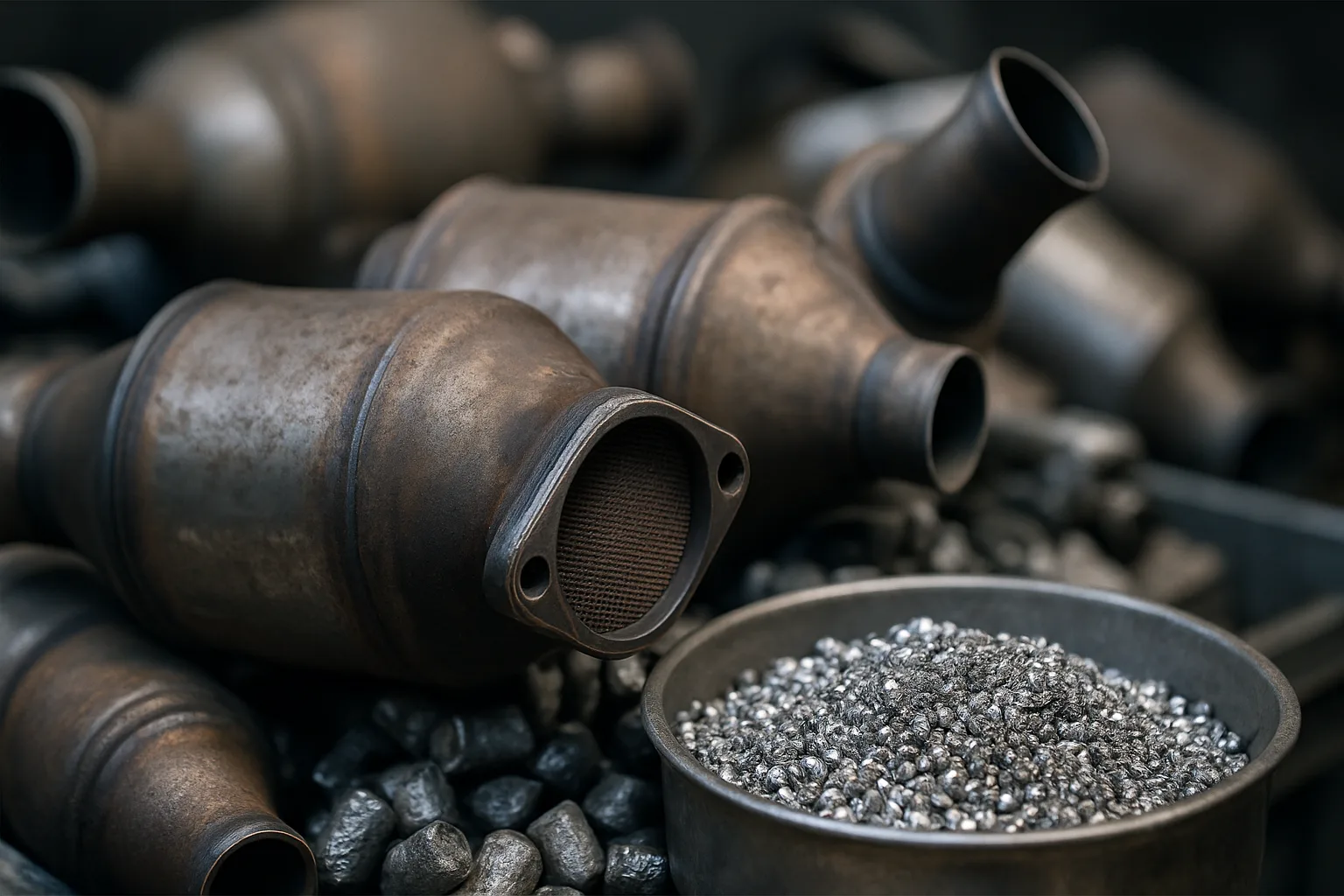
Catalytic converters exist for one reason: to reduce harmful exhaust emissions. Inside every cat is a ceramic or metallic substrate coated with platinum, palladium, and rhodium — the platinum group metals. These metals trigger the chemical reactions that convert carbon monoxide, hydrocarbons, and nitrogen oxides into less harmful compounds before they exit the tailpipe.
As emissions thresholds tighten, automakers need more PGMs per converter, not fewer. To meet stricter NOx and particulate limits, manufacturers load higher concentrations of palladium and rhodium into the substrate. That drives raw PGM demand upward. When demand for virgin PGMs rises, recycled PGMs from scrap converters become more valuable — because they represent a faster, cheaper supply chain than mining fresh material.
Here's why that matters on the ground:
- Higher PGM loading in newer vehicles means higher scrap value per unit when those vehicles eventually get scrapped
- Tighter supply of mined PGMs (especially from South Africa, which produces the majority of global platinum) pushes recyclers to pay more for recovered material
- Stricter enforcement of emissions standards in existing fleets accelerates converter replacement cycles, increasing supply of scrap cats
- Regulations in international markets also affect North American PGM prices, since these metals trade globally
The result? Cat converter prices in Allentown and across Pennsylvania don't move in isolation. They respond to what's happening in policy offices and courthouses thousands of miles away.
What's Changed in 2026 — and Why Sellers Should Pay Attention
In 2026, multiple regulatory frameworks are in active enforcement or rollout phases that bear directly on PGM markets. The EPA's Tier 4 light-duty vehicle emissions standards, expanded low-emission zone policies in major U.S. metro areas, and ongoing California Air Resources Board (CARB) mandates continue to raise the bar for what vehicles must achieve before they leave the factory floor.
More stringent on-board diagnostics (OBD) requirements also mean converters get replaced more frequently during a vehicle's service life. A check-engine light tied to converter efficiency failure is no longer easy to ignore in states with active emissions inspection programs. Pennsylvania runs one of the more active vehicle emissions testing programs in the country, which means the Lehigh Valley — including Allentown — sees a steady flow of replaced converters moving through auto shops and recycling channels.
That's not a bad thing if you're a seller. More replacement volume creates more scrap inventory. The question is whether you're getting a fair price for yours. To find the best scrap converter prices today, you need to understand that market conditions are not static — they shift with every regulatory announcement, every palladium futures move, and every mine disruption halfway around the world.
How Much Is My Catalytic Converter Worth? Understanding Value by Grade and Metal Content
This is the question everyone eventually asks: how much is my catalytic converter worth by reg? The short answer is that value is determined by three factors — the type of converter (domestic, foreign, small foreign, XL), the specific metals it contains, and the current spot prices for platinum, palladium, and rhodium.
Converters aren't priced equally. Here's a rough breakdown of how recyclers typically categorize them:
- Domestic foil/bead: Generally lower PGM content, more common in older American-made vehicles
- Small foreign: Compact converters from smaller import vehicles — moderate content
- Large foreign: Higher-value units from larger import vehicles, often loaded with palladium
- Pre-OBD: Older units from vehicles manufactured before emissions monitoring became standard — variable content
- High-value exotics: Diesel units, diesel particulate filters (DPFs), and converters from luxury or performance vehicles — can carry significantly higher PGM concentrations
The serial number or reg number stamped on the converter housing is how buyers match your unit to assay data and historic returns. That's why catalytic converter buyers in Pennsylvania will ask for it — it's not bureaucracy, it's how they price accurately. If you know your reg number, you're already ahead of most casual sellers. You can check current scrap converter prices to benchmark what your specific unit might fetch based on current metal markets.
Prices fluctuate daily based on precious metal spot rates. Always verify current market conditions before selling — what a converter was worth last month may be meaningfully different from today's value.
The Old Way of Selling Scrap Cats Is Costing You Money
Here's the blunt reality most scrap yards won't tell you: calling one buyer and accepting their number is the single most expensive mistake a converter seller makes. It's not that every buyer is acting in bad faith. It's that without competition, there's no price discovery. You don't know if the price you're hearing is fair, low, or insultingly low.
The old process looks like this: you call your regular contact, they throw out a number, you accept it because you don't have a baseline and getting three more quotes feels like a full day of phone tag. That's exactly the kind of friction that keeps sellers from maximizing their converter scrap value.
Platforms like SMASH — a scrap metal auction platform built specifically for yards and bulk sellers — flip that dynamic. Instead of one buyer making an offer in private, multiple vetted buyers compete for your load. Competition can help reveal the market. More buyers means better price discovery. You're not guessing anymore; you're running an actual market process. If you're handling converter volume in Allentown or anywhere across Pennsylvania, that difference compounds fast.
SMASH also handles documentation — photo documentation, serial tracking, packing lists, and auto-invoicing. That matters more than ever now that state-level scrap converter transaction laws require detailed record-keeping from sellers. You don't want to be caught short on compliance when a regulated sale goes sideways. Get competitive bids for your scrap metal and see what your load is actually worth on the open market.
Finding Catalytic Converter Buyers Near You in the Lehigh Valley
Allentown sits at the center of one of Pennsylvania's most active industrial recycling corridors. The Lehigh Valley's manufacturing history means a steady base of scrapped fleet vehicles, decommissioned equipment, and high-converter-volume trades flowing through the region. That's a real advantage for sellers who know how to work it.
When you're searching for a catalytic converter scrap yard near me in the Allentown area, don't stop at proximity. Ask the right questions:
- Do they price by serial number or by visual grade?
- Do they pull assay data from the specific unit or use generic category pricing?
- What's their turnaround on payment?
- Do they offer itemized breakdowns, or is it a lump sum?
- Can they handle bulk loads with proper documentation?
A local buyer who prices accurately and documents properly is worth more than one who offers a slightly higher headline number but cuts corners on traceability. In a regulated state like Pennsylvania, documentation isn't optional — it's your protection as much as theirs.
For sellers handling meaningful volume, the smarter move is combining local logistics with a broader competitive bidding process. That's where working with platforms like SMASH alongside your local contacts gives you the best of both worlds: regional relationships plus real market competition on price. Read scrap converter pricing guides to sharpen your approach before your next sale.
Timing Your Sale Around PGM Market Conditions
Regulations set the long-term floor for PGM demand. But short-term price swings are driven by spot markets for platinum, palladium, and rhodium — and those can move significantly in either direction over weeks or even days.
Palladium, which is the dominant metal in most gasoline-engine converters, has seen substantial volatility since the post-pandemic supply disruptions that began reshaping the PGM mining landscape in the early 2020s. Rhodium — the highest-value PGM per troy ounce — is notoriously thin on liquidity, meaning small shifts in demand can produce outsized price swings. Platinum has historically lagged palladium for gasoline applications but gains relevance in diesel and hydrogen fuel cell contexts, both of which are growing in regulatory importance.
The practical takeaway: if you're holding inventory, keep an eye on the metals markets. Don't sit on a load for months hoping for a spike without understanding what's driving current pricing. And when you do sell, make sure you're selling into competition — not into a single buyer's margin.
If you're ready to move your converters, the best place to start is a transparent quote process. Find the best scrap converter prices and get a free quote at best-scrap-converter-prices.com — know what your load is worth before you commit to any buyer.
Frequently Asked Questions
Q: How do emissions regulations affect scrap catalytic converter prices in Allentown?
Stricter emissions standards require higher concentrations of platinum group metals in new converters, which increases demand for recycled PGMs from scrap units. That upstream pressure supports stronger scrap catalytic converter prices in Allentown and across Pennsylvania. When regulatory timelines tighten, the recycling market typically responds with higher valuations for quality scrap cats.
Q: How do I find out how much my catalytic converter is worth by reg number?
Your converter's serial or reg number lets buyers match the unit to historical assay data — the actual precious metal returns from that specific converter type. Provide the reg number when requesting a quote, and a reputable buyer will use it to price your unit accurately rather than slotting it into a generic grade bucket. You can benchmark values by checking current rates at best-scrap-converter-prices.com.
Q: Are cat converter prices in Allentown different from other parts of Pennsylvania?
The underlying PGM-driven pricing is consistent statewide, since platinum, palladium, and rhodium trade on global markets. Local variation comes from buyer competition, logistics costs, and volume thresholds. Sellers in Allentown benefit from the Lehigh Valley's active industrial recycling market, but the best strategy is always to get multiple bids rather than relying on a single local buyer's quote.
Q: What should I look for in a catalytic converter scrap yard near me?
Prioritize buyers who price by serial number, provide itemized quotes, and handle documentation properly — especially in Pennsylvania, where scrap converter transaction regulations require detailed records. Fast payment turnaround and the ability to handle bulk loads are also worth asking about upfront. A competitive bidding process through a platform like SMASH can also layer additional buyer competition on top of your local options.
Q: Why does rhodium price matter for my scrap converter value?
Rhodium is one of the three primary PGMs in catalytic converters and historically trades at a significant premium per troy ounce compared to platinum and palladium. Even small amounts of rhodium in a converter substrate can meaningfully affect total scrap value. Rhodium spot prices are highly volatile, so the timing of your sale can have a real impact on what you receive — another reason to monitor market conditions and sell into competition rather than accepting the first offer you receive.
Follow SMASH on LinkedIn for ongoing scrap metal market insights, industry news, and auction platform updates: linkedin.com/company/scrap-metal-auction-sales-hub.
```