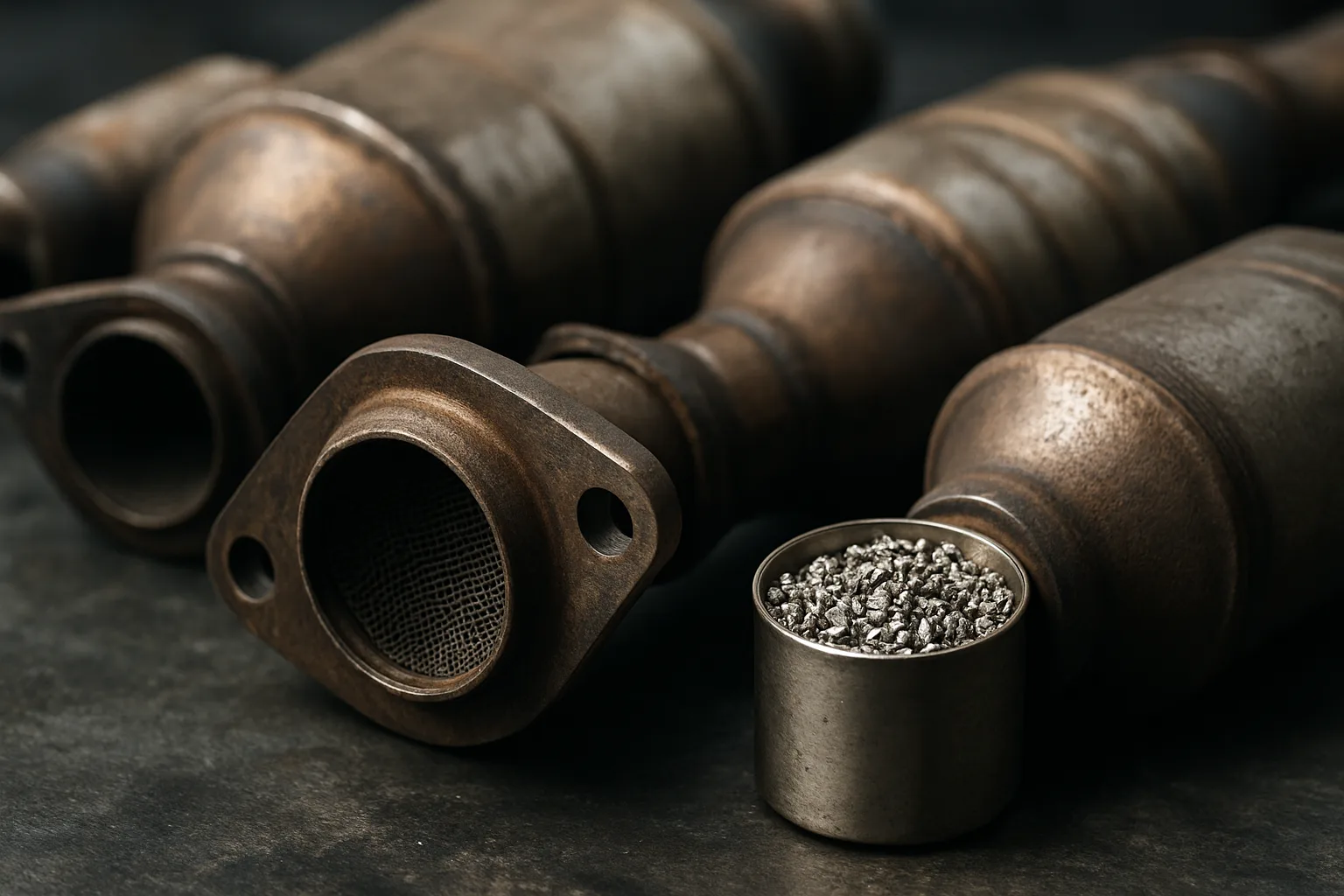
One in three converter sellers gets lowballed — and most never realize it. That's not a scare tactic. That's the reality of a market where buyers profit most when you walk in blind. If you're sitting on a load of cats and trying to figure out what they're actually worth, understanding the scams in this space could be the difference between leaving money on the table and getting paid what the market actually supports.
The catalytic converter recycling market runs on precious metals — platinum, palladium, and rhodium. The platinum price today directly affects what your converters are worth. When buyers hide that connection from you, they're not doing you a favor. They're doing themselves one. This guide breaks down the most common scams, how to spot them, and how to protect yourself — whether you're a yard operator in Mesa, a fleet shop in Phoenix, or a dismantler anywhere in Arizona.
Before you sell, find the best scrap converter prices today so you know what the market actually looks like.
The Flat-Rate Con: Why "We Pay by the Unit" Is Almost Always a Red Flag
Here's the oldest trick in the book. A buyer quotes you a flat dollar amount per converter — say, $85 per unit — regardless of what's inside. Sounds simple. Sounds fair. It's neither.
Catalytic converters vary wildly in precious metal content. A domestic foil cat might carry a fraction of what a high-grade foreign cat holds. A late-model diesel cat from a heavy-duty truck contains significantly more platinum-group metals than a small import unit. When a buyer pays flat rate across the board, they're almost certainly pricing to the lowest common denominator — and making a large margin on everything above it.
The honest version of this business runs on assay data and current spot prices. The platinum price today, combined with the palladium and rhodium spot, determines actual converter value. Any buyer who refuses to connect your price to those numbers is betting you won't look it up. Don't give them that bet. Read scrap converter pricing guides to understand how spot prices translate into converter payouts before you accept any flat-rate offer.
The "No-Name Buyer" Problem and How to Spot Unvetted Catalytic Converter Buyers in Arizona
The converter market has attracted a lot of cash-in-hand buyers over the past several years, particularly as precious metal prices stayed elevated. Some of these buyers are legitimate. Many are not. The problem is that unvetted buyers operate with zero accountability — no verifiable business history, no transparent pricing methodology, and no recourse if the deal goes sideways.
In Arizona, this is especially relevant. The volume of scrap metal moving through the region — from dismantlers, fleet shops, and recycling yards in Mesa, Tempe, and Chandler — makes it a target for transient buyers who show up with a truck and a low offer. They're banking on the fact that sellers want fast cash and won't verify who they're dealing with.
Watch for these warning signs when evaluating catalytic converter buyers in Arizona:
- No physical business address. A legitimate buyer has a location you can verify.
- Cash-only, no paper trail. Real buyers provide documentation — invoices, weight tickets, packing lists.
- Pressure to decide immediately. "This price is only good for the next hour" is a manipulation tactic, not a business practice.
- No reference to spot prices. If they can't tell you how they calculated your offer, they're hiding the math for a reason.
- No VIN or serial tracking. Legitimate platforms document what they buy. That documentation protects you, too.
Vetted buyer networks exist for exactly this reason. Platforms like SMASH require buyers to clear verification standards before they can bid — which means when you receive an offer through that system, you're dealing with someone who has skin in the game and accountability behind them.
Bait-and-Switch Pricing: When the Quote You Got Isn't the Check You Receive
This one is particularly nasty because it happens after you've already shipped your load. A buyer quotes you a strong price over the phone or email. You send the converters. Then comes the revised number — lower than quoted, with explanations you can't verify: "the assay came back light," "precious metal prices dropped since we quoted," "some of these units aren't what we expected."
Sometimes those explanations are legitimate. Markets do move. But without documentation on your end — photos, weights, serial numbers, a clear paper trail — you have no leverage to push back. You're taking their word for what your load contained and what the market did.
The fix is documentation before the load leaves your yard. Every serious converter operation should be running photo documentation and serial tracking on every significant load. That's not paranoia — it's standard practice. When there's a dispute, you have evidence. When there isn't one, you still have a clean record. Platforms like SMASH build this into the workflow, which is one of the reasons sellers using auction-based systems have better outcomes in disputes than those selling direct with no documentation.
If you want to understand how scrap converter value is properly calculated and documented, check current scrap converter prices and look at how pricing methodology is explained transparently.
The Single-Buyer Trap and Why Competition Matters for Your Catalytic Converter Price
This isn't exactly a scam — but it's the structural condition that makes most scams possible. When you call one buyer and accept whatever they offer, you have no market reference point. You don't know if the offer is strong, average, or insulting. You have one data point and zero leverage.
That's not an accident. Single-buyer relationships benefit buyers. They can offer below market, and without competition, there's nothing to correct the price.
The platinum price today is public information. Palladium and rhodium spot prices are public information. The formulas that convert those spot prices into per-unit converter payouts are not complicated. What's complicated — intentionally — is the gap between what you can verify and what you're actually being offered. That gap is where margin lives for buyers who aren't competing for your business.
A scrap metal auction platform changes that dynamic entirely. When multiple vetted buyers compete for your load, the price discovery process works in your favor. One buyer might stretch to win the bid. Another might value your specific units differently based on their processing relationships. Competition can help reveal the market in ways that a single phone call never will.
For catalytic converter buyers in Mesa and across the broader Arizona market, SMASH connects sellers with a vetted buyer network so that no single buyer controls what you're offered. More buyers means better price discovery. That's not a marketing claim — it's how auctions work.
Hidden Fees, Deductions, and the Fine Print That Eats Your Payout
Even when buyers aren't outright lying about your converter's value, they can quietly reduce your net payout through fees and deductions buried in the terms. Processing fees. Handling charges. "Moisture deductions" on loads that weren't wet. Refining fees that weren't disclosed upfront.
These deductions can be legitimate — refining and processing are real costs in this business. But they should be disclosed before you commit to the sale, not revealed after you've already shipped your load and have no negotiating position left.
Before you finalize any deal with a catalytic converter buyer, ask these questions upfront:
- What is the all-in net price after any fees or deductions?
- How is the assay conducted, and can you receive documentation of the results?
- What is the payment timeline, and what form does payment take?
- Are there any deductions applied to the quoted price?
- What happens if there's a dispute about the assay results?
A buyer who can't answer these questions clearly before the load ships is not a buyer you want to do business with. Legitimate operations — whether you're dealing with a catalytic converter buyer in Mesa or anywhere in the country — can answer these questions without hesitation because they have nothing to hide.
To find the best price for your scrap on SMASH, the process is transparent from bid to payout — no surprise deductions buried in the fine print.
How to Protect Yourself: A Practical Checklist Before You Sell
You don't need to become a precious metals expert to avoid getting burned. You need a process. Run through this checklist before any converter sale, and you'll eliminate most of the risk.
- Know the spot prices before you talk to anyone. Check platinum, palladium, and rhodium spot prices the morning you're having pricing conversations. The platinum price today is publicly available and takes 30 seconds to look up.
- Document your load before it ships. Photos, unit counts, serial numbers, weight — all of it. Keep copies.
- Get the offer in writing before the load moves. Verbal quotes are not binding. Written offers are.
- Ask about all fees before you agree. Net price is what matters, not gross.
- Verify the buyer. Business address, industry presence, references — a buyer who won't provide these doesn't deserve your load.
- Use competitive bidding where possible. One offer is a starting point. Multiple offers are a market.
- Understand payment terms. When do you get paid? By what method? What's the dispute process?
This isn't complicated. It's discipline. And it's exactly the kind of process that platforms like SMASH are built to support — with inventory tools, photo documentation, VIN lookup, serial tracking, and auto-invoicing baked into the workflow. No subscription fees, either. SMASH only wins when you do.
If you're tired of guessing and ready to let competition work in your favor, find the best scrap converter prices today and see what transparent pricing actually looks like.
Frequently Asked Questions
Q: How does the platinum price today affect what I get for my catalytic converters?
Catalytic converters contain platinum, palladium, and rhodium — all precious metals with daily spot prices. When the platinum price today is high, converters with significant platinum content are worth more. Buyers calculate offers based on estimated precious metal content multiplied by current spot prices, minus processing costs. If a buyer won't explain how they got to your number, ask them to show their math.
Q: How do I find a legitimate catalytic converter buyer in Mesa or elsewhere in Arizona?
Look for buyers with a verifiable physical address, documented pricing methodology, and clear payment terms. In Mesa and across Arizona, the converter market includes both legitimate operations and transient buyers with no accountability. Using a vetted platform like SMASH eliminates the guesswork — buyers on the platform have been verified before they can bid on your load.
Q: What should I do if a buyer changes the price after I ship my load?
This is where pre-shipment documentation matters most. If you have photos, unit counts, serial numbers, and a written quote, you have a basis to dispute the revised offer. Without that documentation, you're relying on the buyer's word. Always document before shipping and get written confirmation of any price quote before the load leaves your yard.
Q: Is a flat-rate price per converter unit ever legitimate?
Flat-rate pricing isn't automatically a scam, but it almost never benefits the seller when there's a mixed load with varying precious metal content. Buyers use flat rates to simplify their margin calculation — they profit on the high-value units and break even on the low-value ones. For any meaningful load, pushing for unit-by-unit or grade-based pricing tied to current spot rates will typically produce a better outcome.
Q: What fees are normal when selling catalytic converters, and which ones are red flags?
Legitimate deductions include processing, refining, and handling costs — these are real expenses in the recovery process. Red flags are any fees that weren't disclosed before you agreed to the sale, deductions for conditions you can't verify (like "moisture" on a dry load), or charges that appear on the final settlement but weren't mentioned in the original terms. Always ask for a complete fee schedule before the deal is finalized.
The converter market rewards sellers who know their numbers and know who they're dealing with. If you're ready to stop guessing and start getting competitive offers on your loads, find the best scrap converter prices — get a free quote at best-scrap-converter-prices.com.
Disclaimer: Catalytic converter prices fluctuate based on daily precious metal spot prices. Always check current scrap converter prices before accepting any offer.
Follow SMASH on LinkedIn for real-time scrap metal market insights and industry updates: linkedin.com/company/scrap-metal-auction-sales-hub.
```