Most converter sellers focus on one thing: what's the converter worth today? That's fair. But here's what often gets overlooked — the way your converter gets recycled directly affects the price you receive. Proper recycling means the platinum group metals (PGMs) inside get fully recovered. Sloppy processing means metal gets lost, and someone in that chain takes the hit. Understanding how the recycling process works isn't just good for the planet — it helps you make smarter decisions about where you sell and who you trust with your load. If you're in Long Beach trying to get accurate scrap catalytic converter prices, this guide breaks down what's actually happening inside your cat — and why it matters more than you think.
What's Actually Inside a Catalytic Converter
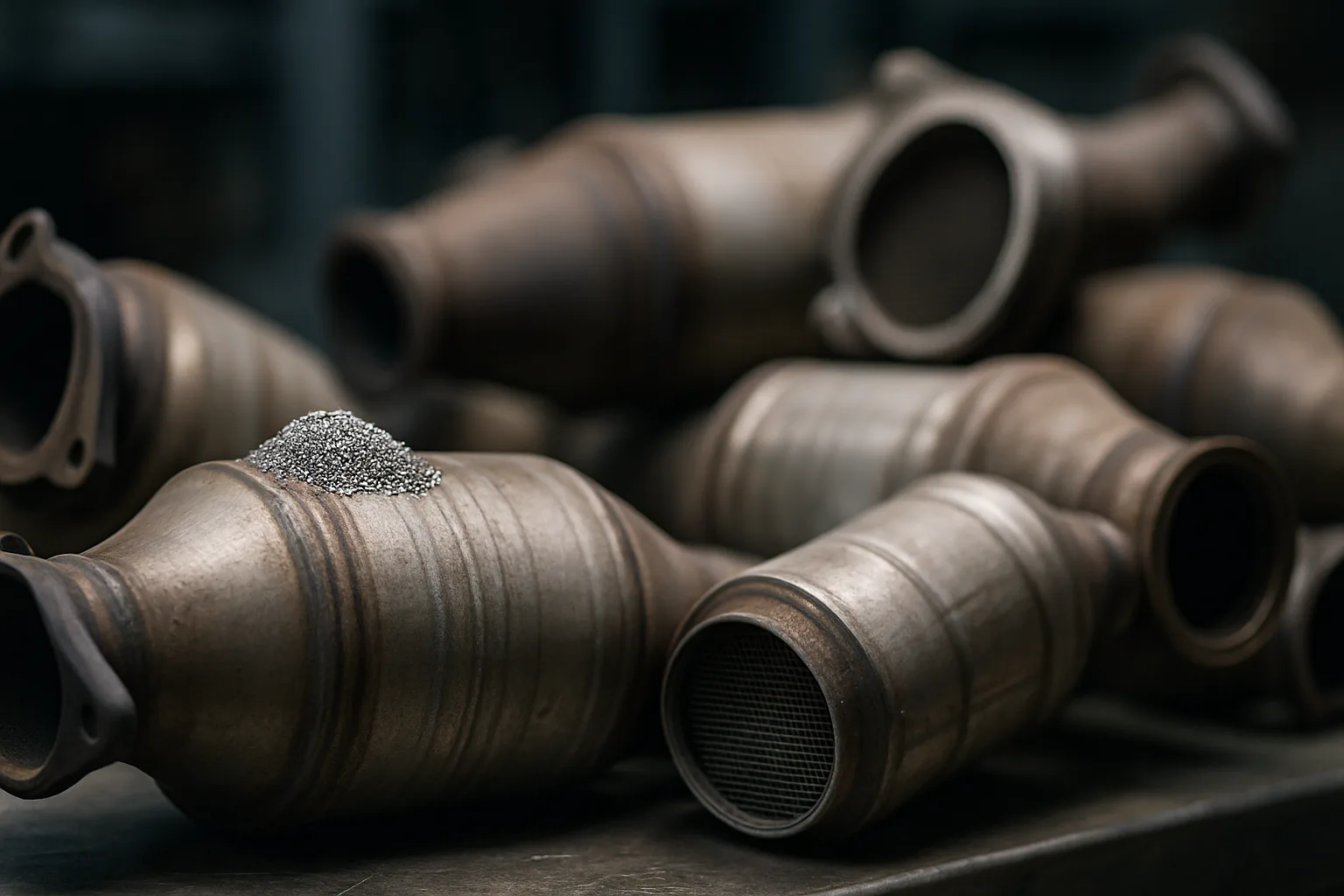
Strip away the steel shell and you'll find a ceramic or metallic honeycomb substrate coated with three of the rarest metals on Earth: platinum, palladium, and rhodium. These are platinum group metals — PGMs — and they're the entire reason a spent cat has scrap value. They act as catalysts, triggering chemical reactions that convert toxic exhaust gases into less harmful compounds. After thousands of hours under extreme heat, the substrate degrades, but the metals don't vanish. They're still there, waiting to be recovered.
This is why converter scrap value varies so widely between units. A late-model diesel truck cat might carry significantly more PGM loading than a small four-cylinder economy car converter. The make, model, engine size, and even the emissions standards the vehicle was built to meet all influence how much platinum, palladium, or rhodium ended up on that substrate. Buyers who know their data — and use tools like VIN lookup and serial tracking — can give you a more accurate converter scrap value quote than someone guessing off the top of their head.
- Platinum: Often the dominant metal in older diesel converters
- Palladium: More prevalent in gasoline-powered vehicle cats built after the mid-1990s
- Rhodium: Present in smaller quantities but historically commands premium prices per troy ounce
- Substrate type: Ceramic versus metallic affects recovery efficiency and processing method
When you're ready to find the best scrap converter prices today, knowing your converter type puts you in a stronger negotiating position. Generic quotes from uninformed buyers often leave money on the table — sometimes significant money, depending on your load.
The Environmental Cost of Doing It Wrong
PGMs don't occur in nature in any abundance. Global platinum and palladium mining is concentrated in a handful of regions, primarily South Africa and Russia. Extracting one troy ounce of platinum from ore requires processing roughly 10 to 12 tons of rock, burning enormous amounts of energy, and generating significant environmental waste. Every troy ounce recovered from a recycled converter is one that doesn't need to be mined from the ground.
When catalytic converters end up in landfills — or get processed by unqualified handlers who can't fully extract the PGM content — that recovery opportunity disappears. The metals may end up locked in slag or lost during incomplete smelting. That's not just a financial waste for the seller. It's a resource waste at a global scale. California has some of the strictest environmental standards in the country precisely because these downstream impacts are well documented. Long Beach, as a major port city and industrial hub, operates under intense regulatory scrutiny around material handling and disposal.
Proper catalytic converter recycling involves a documented chain of custody, accurate assay testing, and smelting by certified processors who can quantify and recover PGM content with precision. The SMASH scrap metal auction marketplace connects sellers with vetted buyers who operate within these standards — not buyers who are guessing at your converter's value and hoping the math works out later.
How Transparent Pricing Supports Responsible Recycling
There's a direct connection between price transparency and environmental responsibility that most people never consider. When buyers compete openly for your load — based on real assay data and current PGM spot prices — they're forced to accurately value what's in the converter. That accurate valuation only makes sense if they intend to recover the full PGM content properly. A buyer offering you a lowball price isn't just underpaying you — they may be planning to process the material in a way that doesn't fully extract the metals.
Auction-based platforms flip this dynamic entirely. When multiple catalytic converter buyers in California bid on the same load, each buyer has to put their best number forward. That competition rewards sellers who document their inventory properly — with photos, weights, serial numbers, and substrate identification. It also rewards processors who can actually deliver on their assay estimates, because their reputation with vetted networks depends on it.
SMASH uses photo documentation, serial tracking, and competitive auction formats to make this process systematic. You're not guessing. You're not taking whoever calls back first. You're seeing actual market demand expressed as real bids — and that's how cat converter prices in Long Beach should work.
- Documented inventory builds buyer confidence before bidding even starts
- Competitive bids reflect real PGM market conditions, not a buyer's margin protection
- Vetted buyers means fewer surprises after the load ships
- Auto-invoicing and chain-of-custody records support compliance requirements
What the Recycling Process Actually Looks Like
Once your converters leave your yard, they go through a multi-step process before the metals are recovered. First, converters are de-canned — the steel shell is removed to expose the substrate. The substrate is then crushed and granulated into a powder called "black powder" or catalyst material. This material gets sampled and assayed to determine exact PGM content before being sent to a primary smelter.
At the smelter, the material is processed at extremely high temperatures. PGMs are separated through a series of chemical and metallurgical steps. The final output is refined platinum, palladium, and rhodium — ready to reenter the supply chain for automotive manufacturing, electronics, or industrial applications. This loop is why reading scrap converter pricing guides that explain PGM recovery matters so much. The more you understand this chain, the better you can evaluate whether a buyer is actually positioned to recover the full value of what you're selling.
Reputable processors publish their assay methodologies and can provide lot-level settlement reports. If a buyer can't explain how they process material or can't offer any assay transparency, that's a red flag — for your revenue and for environmental accountability.
Why Long Beach Sellers Have an Advantage — If They Use It
Long Beach sits at one of the busiest port complexes in North America. That geography creates real logistical advantages for converter recyclers. Material can move efficiently through established freight networks. Buyers operating along the West Coast can access Long Beach loads competitively. And California's regulatory environment — while demanding — actually creates a level playing field that benefits sellers working with legitimate, compliant buyers.
The problem is that many yards in and around Long Beach still rely on the old approach: one relationship, one phone call, one price. No comparison. No documentation. No competition. That works fine for the buyer. It doesn't work for the seller. Scrap catalytic converter prices in Long Beach should reflect actual PGM spot market conditions plus real buyer competition — not whatever margin one buyer decides to build into their offer today.
Platforms like SMASH exist to fix exactly this gap. Whether you're moving a handful of cats or a full truckload, the principle is the same: documented inventory plus competitive bidding produces better price discovery than a single cold call. If you're a California yard operator who hasn't explored auction-based selling for your converter inventory, you're leaving a real opportunity unused. Check current scrap converter prices and see what your load is actually worth in a competitive market.
Secondary Keywords and Terms to Know
If you've been searching for sell catalytic converter or trying to understand terms like platinum group metals recycling, you may have encountered platforms and buyers that operate across the U.S. and Canada. It's worth knowing that the market for PGMs is global — spot prices for platinum, palladium, and rhodium are set by international trading activity and don't vary by state or country. What does vary is how well individual buyers can execute recovery and how much competition exists in your local market.
A catalytic converter auction format bridges that gap. Instead of being limited to who happens to call your yard, you're accessible to a vetted buyer network across the continent. That's how sellers in Long Beach or anywhere else in California access pricing that actually reflects what the metals are worth — not what one buyer decides to offer on any given Tuesday.
No subscription fees. No guessing. Just competition doing what competition does — pushing prices toward where they should actually be.
Frequently Asked Questions
Q: How are scrap catalytic converter prices in Long Beach determined?
Prices are based on the PGM content of each converter — specifically the platinum, palladium, and rhodium loading — combined with current spot market prices for those metals. The make, model, and substrate type of the converter all affect its value. In a competitive market like a catalytic converter auction, buyers bid based on this data, which produces more accurate pricing than a single buyer quoting from memory.
Q: Why do cat converter prices vary so much between buyers?
Different buyers have different processing capabilities, different overhead structures, and different access to PGM markets. A buyer who can't accurately assay your load will build more margin into their offer to protect against uncertainty. Documented inventory and competitive bidding reduce that uncertainty — which typically moves prices in the seller's favor. That's the core argument for using a platform like SMASH over a single-buyer arrangement.
Q: Are catalytic converter buyers in California required to follow specific regulations?
Yes. California has specific regulations around the purchase and sale of catalytic converters, including documentation requirements for sellers and buyers designed to combat theft. Legitimate buyers operating in Long Beach and across the state comply with these requirements. Working with vetted buyers through an audited platform adds another layer of compliance documentation for your records.
Q: Does recycling catalytic converters actually make an environmental difference?
Significantly. Recovering PGMs from spent converters reduces the demand for virgin mining, which is one of the most resource-intensive and environmentally damaging extraction processes in the metals industry. Every recycled converter that goes through a proper processor contributes to closing the loop on these metals — keeping them in the supply chain rather than extracting more from ore.
Q: How do I get an accurate converter scrap value for my load?
Start with documentation — photos, weights, and serial or part numbers where available. Use a platform or buyer that offers assay transparency and can explain their pricing methodology relative to current PGM spot prices. Avoid buyers who quote flat rates across all converter types without any differentiation. SMASH connects sellers with vetted buyers who compete for your load based on documented inventory, which produces the most accurate market-based pricing available.
---Proper recycling isn't just about compliance — it's about extracting every dollar of value your converters actually hold while ensuring that value gets captured responsibly. If you're in Long Beach or anywhere across California and you're still relying on one buyer and one phone call, you're working with incomplete market data. Find the best scrap converter prices by letting the market tell you what your load is worth — get a free quote at best-scrap-converter-prices.com.
Disclaimer: Catalytic converter prices fluctuate with PGM spot markets. Always check current rates before finalizing any transaction.
Follow SMASH on LinkedIn for scrap metal market updates, PGM pricing insights, and industry news: linkedin.com/company/scrap-metal-auction-sales-hub.