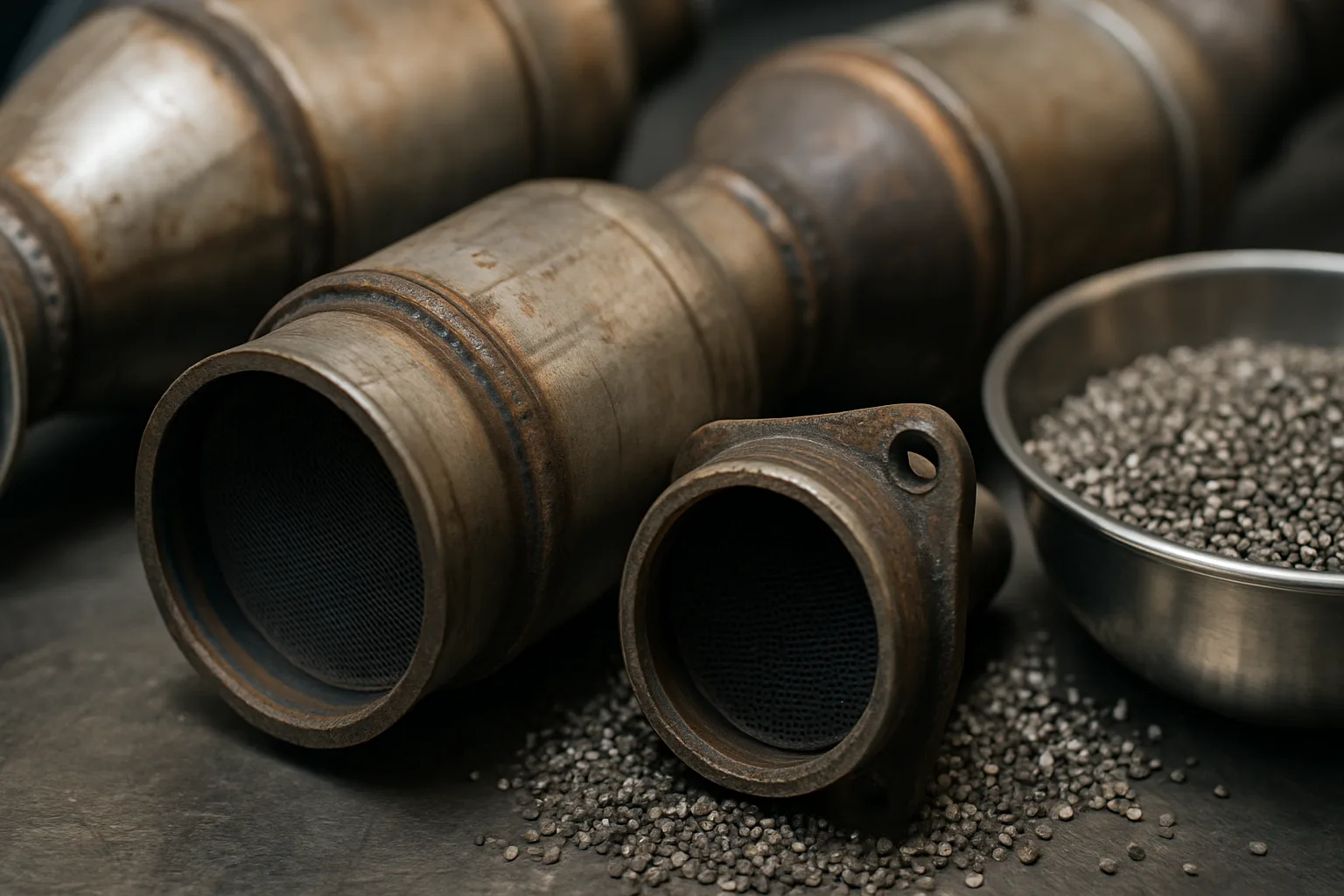
Hybrid Catalytic Converters Load More Precious Metal — Here's Why That Changes Your Scrap Value
Most scrap sellers know catalytic converters are worth something. Fewer know that a hybrid vehicle's converter can be worth significantly more than the same part pulled from a conventional gas engine — sometimes by a wide margin. If you're sitting on hybrid cats and pricing them like standard units, you're leaving real money on the table. Understanding catalytic converter scrap value starts with understanding what's actually inside the part you're selling.
Hybrid converters are built differently because they operate differently. That difference shows up directly in precious metal content — and precious metal content is what drives converter scrap value at every level of the supply chain.
Why Hybrid Vehicles Use More Precious Metals in Their Converters
A conventional gas engine runs constantly while the vehicle moves. Its catalytic converter reaches and maintains operating temperature quickly. That means the converter can rely on consistent heat to drive the chemical reactions that reduce harmful emissions.
Hybrid engines are different. They cycle on and off. The combustion engine shuts down at stops, in low-speed traffic, or when the battery has sufficient charge. Every time the engine restarts, the catalytic converter has to perform — sometimes before it has fully warmed up. Cold-start emissions are the hardest to control, and the converter has to compensate.
To handle this demand, hybrid converter designs typically load higher concentrations of platinum group metals (PGMs) — primarily:
- Palladium — the primary active metal in modern gasoline converters, essential for oxidation reactions
- Platinum — works alongside palladium and handles broader reaction temperatures
- Rhodium — the most expensive PGM by weight, critical for reducing nitrogen oxides (NOx)
More frequent cold starts mean the substrate needs more active metal loading to maintain emission compliance across the vehicle's full duty cycle. OEMs engineering hybrid drivetrains don't cut corners here — stricter emissions standards in 2026 make that impossible. The result is a converter that's more complex and more metal-rich than most standard units.
What This Means for Catalytic Converter Scrap Value: A Direct Comparison
Not every hybrid converter is a jackpot — and not every standard converter is low-value. But when you compare across similar vehicle classes and model years, hybrid units consistently trend higher in PGM content. Here's how that plays out in practical terms:
Standard Gasoline Converters
- Moderate palladium loading, calibrated for steady-state operation
- Rhodium content varies widely by manufacturer and emissions tier
- Often a single converter per vehicle on smaller engines
- Scrap value range varies significantly based on make, model, and condition
Hybrid Converters
- Higher PGM loading to compensate for cold-start cycling
- Often paired with additional close-coupled converters near the engine manifold — maximizing heat capture on restart
- Some hybrid platforms use two converter assemblies, doubling the recoverable PGM content
- Greater substrate surface area in many designs, requiring more washcoat and more metal
The palladium price today is a core driver of what your hybrid converter is actually worth. Palladium markets fluctuate based on global supply constraints (significant mining concentration in Russia and South Africa), industrial demand from automotive production, and broader precious metals sentiment. When palladium trades high, hybrid converters with elevated palladium loading command meaningfully better scrap returns. Check current rates before you sell — never lock in a price based on what you heard last month.
The Top Hybrid Platforms Known for Higher-Value Converters
If you're sourcing, dismantling, or just selling the converter off your own vehicle, knowing which platforms tend to carry higher-value units saves time. This isn't an exhaustive list, but these are hybrid platforms that scrap buyers consistently pay attention to:
- Toyota Prius (all generations) — One of the most recognized names in hybrid converter recycling. Known for consistent PGM loading and global availability of assay data. High-mileage Prius converters still hold value because the substrate degrades more slowly than the drivetrain.
- Toyota Camry Hybrid / RAV4 Hybrid — Larger displacement hybrids often carry more converter material by volume. RAV4 Hybrid in particular has surged in market share since 2022, making these units increasingly available in the recycling stream.
- Ford Escape Hybrid / Ford Fusion Hybrid — Domestic hybrid platforms with solid PGM recovery records. Worth identifying the specific part numbers before selling — assay data varies by model year.
- Honda Accord Hybrid / CR-V Hybrid — Honda's IMA and two-motor hybrid systems have evolved significantly. Newer generations use close-coupled converters that command attention from serious buyers.
- Lexus RX / ES Hybrid — Luxury-tier hybrids often carry premium converter assemblies. Larger vehicles with stricter emissions calibration tend to run higher PGM content.
- Kia / Hyundai Hybrid Platforms — Korean automakers have expanded hybrid production aggressively. Their converters are increasingly present in the scrap stream and worth properly identifying before pricing.
The key takeaway: don't guess. The catalytic converter worth at scrap yard depends entirely on the specific unit, its condition, and current metal markets — not just the word "hybrid" on the vehicle badge. A properly identified converter gets a better price than a mystery unit sold blind.
Selling Hybrid Converters in Grand Forks and North Dakota — What the Market Looks Like
Grand Forks sits in a region where the auto recycling market is active but not always transparent. Local scrap yards may buy converters, but the single-buyer model has a well-known problem: you get one number, with no visibility into how that number was calculated or whether it reflects current PGM markets.
That's the core issue for sellers in Grand Forks and across North Dakota. If you pull a hybrid converter off a Prius and bring it to one local buyer, you have no way of knowing whether their offer reflects today's palladium price or last month's. You're negotiating blind against someone with full market data.
Platforms like SMASH solve this directly. Instead of calling one buyer and accepting their number, you put your converters in front of vetted buyers who compete for the load. Competition does what a single phone call never can — it reveals the actual market. If you want to sell your scrap metal on the SMASH marketplace, you're not guessing what your converters are worth. You're finding out.
For sellers in the Grand Forks area, the practical advantage is real. You don't need to drive to multiple yards or make a dozen calls. You document your load — photos, part numbers, condition notes — and let buyers compete. The Grand Forks scrap metal services available through platforms like SMASH connect local sellers to a broader buyer network without requiring you to leave your yard.
How to Properly Document Hybrid Converters Before You Sell Scrap Metal Online
If you want the best return on hybrid converters, documentation is your leverage. Buyers price uncertainty with a discount. A well-documented converter gets priced on its merits — not on the buyer's assumption of worst-case PGM content.
Here's what good documentation looks like when you sell catalytic converters North Dakota buyers will actually compete for:
- Part number identification — Every converter has a casting number or stamped code. This is the single most important piece of information for accurate pricing. If buyers can look up assay data, they'll bid with confidence.
- VIN or vehicle source data — Knowing the year, make, and model helps buyers cross-reference known PGM profiles for that platform. Some platforms include VIN lookup tools specifically for this purpose.
- Photos of condition — Show both ends of the converter. Internal damage, melted substrate, or significant physical damage affects value. Don't hide it — disclose it upfront and get priced accordingly.
- Quantity and lot details — Selling multiple units? Document the full load. Volume can improve your position with buyers who pay better for larger, consistent lots.
- Weight — Even approximate weight helps buyers estimate substrate volume before assay.
SMASH's platform includes inventory tools, photo documentation, and serial tracking built specifically for this process. You're not emailing photos to one contact and waiting. You're building a documented listing that multiple vetted buyers can evaluate simultaneously. To find the best scrap converter prices today, proper documentation is where the process starts.
When to Sell — Timing Hybrid Converter Scrap Around Metal Markets
Precious metal markets move. Palladium has traded across a wide range in recent years, and rhodium volatility has been even more dramatic. If you're holding a significant volume of hybrid converters, market timing isn't irrational — it's legitimate inventory management.
That said, timing requires information. Most yard operators don't have real-time visibility into PGM spot prices or how refinery spreads are moving. The gap between spot price and what a buyer offers represents their margin — the more buyers competing for your load, the tighter that gap tends to get.
For current rates, check current scrap converter prices before committing to a sale. The market on any given Friday is not the same as it was two weeks ago. And if you're looking for context on how converter values are moving, read scrap converter pricing guides to understand what's driving the numbers.
Disclaimer: Converter scrap prices fluctuate based on daily precious metal spot prices, refinery rates, and individual converter specifications. Always verify current market rates before finalizing any sale.
Hybrid converters represent a real opportunity in the scrap stream — but only if you treat them like what they are: high-value, precision-identified units that deserve accurate pricing. Don't sell them like generic scrap. If you want to get a fair return on your hybrid cats, start at best-scrap-converter-prices.com for a free quote and let the market tell you what they're actually worth.
Frequently Asked Questions
Q: Why are hybrid catalytic converters worth more at the scrap yard than standard ones?
Hybrid engines cycle on and off constantly, which means their converters face more frequent cold starts. To maintain emissions compliance under these conditions, manufacturers load hybrid converters with higher concentrations of palladium, platinum, and rhodium — the precious metals that drive scrap value. More PGM content means more recoverable metal, which means higher scrap returns.
Q: How do I find out the catalytic converter scrap value of a specific hybrid unit?
The most reliable method is identifying the casting number or part number stamped on the converter and cross-referencing it with current assay data. Platforms like SMASH use part number identification and documented listings to connect sellers with vetted buyers who price based on actual PGM content — not guesswork. You can also check current scrap converter prices to get a baseline before approaching any buyer.
Q: Where can I sell catalytic converters in North Dakota and get a fair price?
Local scrap yards in Grand Forks will buy converters, but a single buyer gives you a single number with no competition. Using an online marketplace like SMASH connects you to multiple vetted buyers who compete for your load — which is how you find out what your converters are actually worth on the open market. You can also explore Grand Forks scrap metal services for local options that connect to a broader buyer network.
Q: Does the palladium price today affect what I get paid for my hybrid converter?
Directly, yes. Palladium is the primary active metal in most modern gasoline and hybrid converters, and its spot price influences what refiners pay and what buyers offer downstream. When palladium prices are elevated, hybrid converter scrap values move with them. Always check current PGM spot prices before selling — converter offers based on outdated metal prices won't reflect current market conditions.
Q: Is catalytic converter recycling near me a better option than selling online?
Local recyclers are convenient, but convenience often costs you money. A nearby yard gives you one offer based on their margin targets — not a competitive market rate. Selling through an online platform exposes your load to multiple buyers simultaneously, which typically produces better price discovery. Many sellers in Grand Forks and across North Dakota use online platforms alongside local relationships to benchmark offers and avoid underpricing their loads.
Follow SMASH on LinkedIn for ongoing updates on scrap metal market trends, PGM price movements, and practical insights for yards and sellers across North America.
```