Which Vehicles Carry the Highest OEM Catalytic Converter Value in 2026
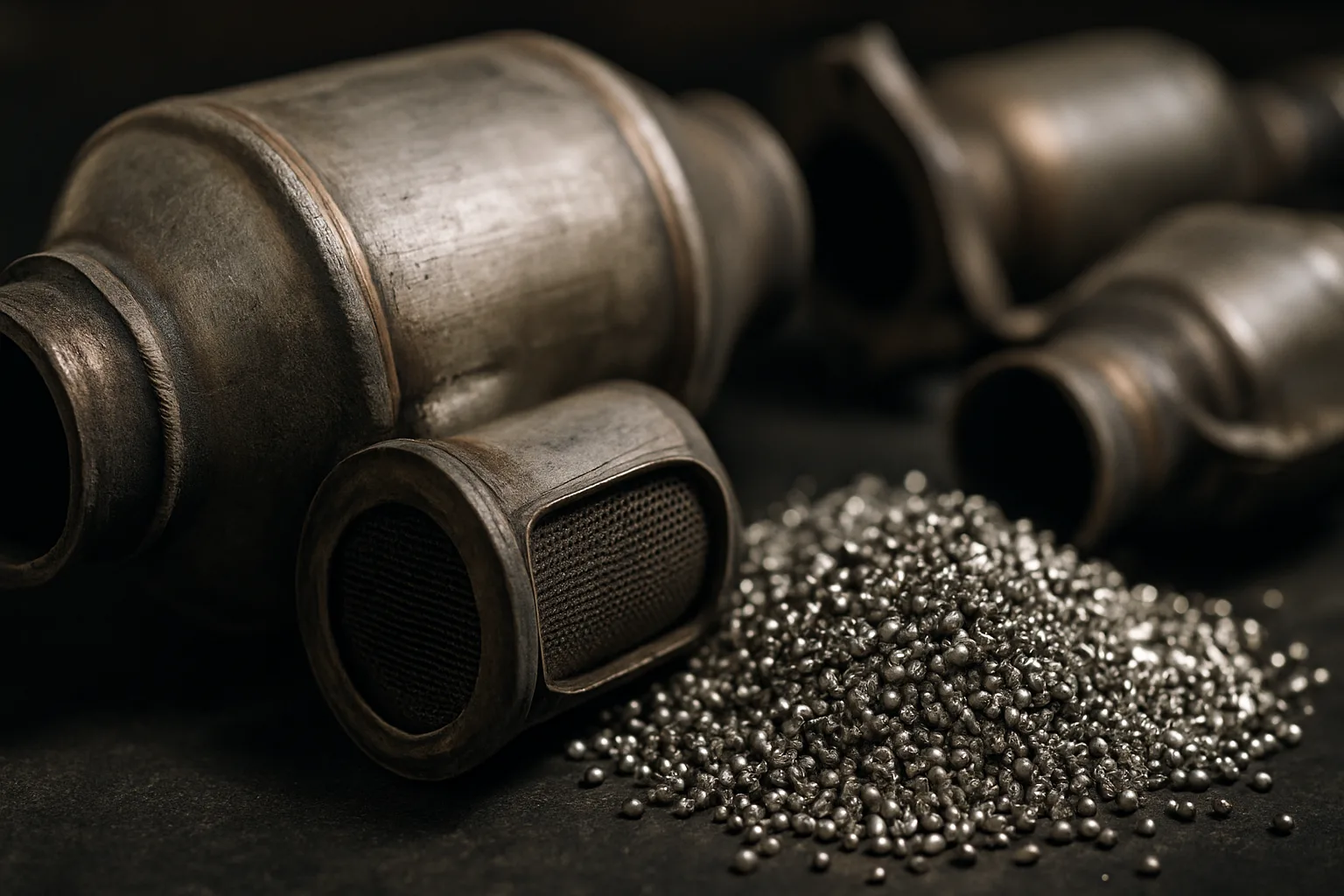
Not all cats are created equal. If you've pulled a converter off a Ferrari, a Ford F-250, or a late-model Toyota Prius and you're wondering why the price quotes vary so wildly — the answer lives inside the unit itself. OEM catalytic converter value is driven almost entirely by the precious metal content: platinum, palladium, and rhodium. The vehicle make and model determines how much of each metal is packed into that converter, and that directly determines what a recycler will pay.
For yards and independent sellers in Joliet, Illinois and across the Midwest, knowing which makes and models carry the most value before you sell is the difference between getting a fair price and leaving money on the table. This guide breaks down the most valuable converters by vehicle category — and shows you how to make sure you're getting a competitive offer when it's time to sell.
Why OEM Catalytic Converter Value Varies So Much by Make and Model
The short answer: emissions compliance requirements differ by vehicle type, engine size, and intended market. Trucks and SUVs with large displacement engines typically need more precious metal loading to meet federal EPA standards. Performance vehicles and luxury imports often run higher-grade catalyst formulations. Hybrids, surprisingly, can carry significant converter value because their engines cycle on and off, requiring a more robust catalyst to handle cold starts efficiently.
The three metals that matter are:
- Platinum (Pt) — Historically used in diesel converters. Prices shift with industrial demand.
- Palladium (Pd) — Dominant in gasoline vehicle converters. Has seen significant price swings over the past several years.
- Rhodium (Rh) — The rarest of the three. Even small concentrations drive converter value dramatically upward.
OEM converters — meaning factory-installed original equipment units — carry higher precious metal loadings than aftermarket replacements. A direct-fit OEM unit from a major automaker can be worth several times more than a universal aftermarket cat of similar size. When you're pricing a load of converters, knowing whether you're dealing with OEM units versus aftermarket is step one.
The Most Valuable Catalytic Converters by Vehicle Make and Model
Here's where it gets practical. These are the vehicle categories and specific makes and models consistently associated with high catalytic converter scrap value in the North American market. Prices fluctuate based on PGM spot rates — always check current rates before you sell.
1. Toyota and Lexus (Especially Prius and Land Cruiser)
Toyota converters are consistently among the most sought-after in the scrap converter market. The Toyota Prius is arguably the most recognized high-value cat in the entire industry. Because the Prius engine starts and stops repeatedly throughout every drive cycle, its converter must perform reliably from cold every time — that demands heavier precious metal loading. The result is a converter with notably strong scrap value relative to its physical size.
The Toyota Land Cruiser and 4Runner with V8 engines also carry converters worth paying close attention to. Lexus models — particularly the LX and GX SUVs — share many powertrain components with their Toyota counterparts and carry comparable converter values. If you're sorting a mixed load in Joliet, pull Toyota and Lexus units aside first.
2. Ford F-Series Trucks and Diesel Applications
Full-size Ford F-250 and F-350 trucks with diesel powerplants use platinum-heavy converter formulations. These larger format converters carry significant weight and precious metal content. The sheer size of a diesel oxidation catalyst from a Super Duty platform means more substrate surface area — and more PGM loading per unit.
Gasoline-powered F-150s with larger V8 engines also carry converters worth documenting carefully. Ford's OEM supply chain is heavily North American, which means these units show up frequently at Illinois yards. Don't let them move through your facility without accurate identification.
3. Ferrari, Lamborghini, and High-Performance Imports
Exotic vehicles run rich catalyst formulations. Ferrari and Lamborghini converters are relatively rare — you won't see them every day — but when they come through, the value per unit can be exceptional. These manufacturers use high-density, high-loading substrates to meet stringent European and California emissions standards simultaneously. A single Ferrari converter can represent significant value if properly identified.
The challenge is accurate identification. These units don't always have obvious markings. Photo documentation and serial tracking matter here. Platforms like SMASH Scrap — where verified buyers bid on your metal allow you to document these units with photos and serial data before listing, so buyers are bidding on verified product — not a best guess.
4. Ram 2500/3500 and GM Heavy Trucks
Diesel-powered Ram and GM heavy-duty trucks follow a similar pattern to Ford diesel applications. The Cummins and Duramax diesel platforms use platinum-based catalysts, and the converters on these platforms are physically large. Chevrolet Silverado HD and GMC Sierra HD units show up regularly at Midwest yards — including across northern Illinois — and deserve careful attention when sorting.
5. Honda and Acura (Particularly Ridgeline and MDX)
Honda's converters don't always get the same recognition as Toyota's in casual conversation, but the Ridgeline and Acura MDX consistently produce converters with solid scrap value. Honda OEM units are known for consistent precious metal loading. The Acura NSX and TL also carry converters worth noting, particularly earlier V6 applications.
How to Know What You Actually Have: Identification and Documentation
A high-value converter sitting in a mixed bin with no documentation is a missed opportunity. Buyers can't confidently bid top dollar on a unit they can't verify. This is where accurate identification — using VIN lookup, serial number tracking, and photo documentation — directly affects what you get paid.
Before you sell, document:
- Vehicle make, model, and year — This alone narrows the range significantly.
- Converter serial number or OEM part number — Stamped or laser-etched on most OEM units.
- Physical condition — Intact substrate, no visible damage, original end pipes.
- Photos — Multiple angles, including serial number close-up.
Sellers in Joliet who take the time to sort and document their loads consistently get stronger offers than those selling mixed, unidentified material. Buyers pay a premium for certainty. When you check current scrap converter prices and compare offers, documented loads give you real leverage.
SMASH supports serial tracking and photo documentation at the inventory stage, so buyers bidding on your converters know exactly what they're getting. That transparency creates competition. Competition helps reveal the true market value of what you're holding.
Catalytic Converter Prices Today: What Drives the Market in 2026
If you've been watching catalytic converter prices today, you already know the market doesn't sit still. PGM prices respond to mining output, automotive production rates, EV adoption curves, and broader industrial demand. Rhodium in particular has demonstrated its ability to move sharply in short periods.
In 2026, a few market dynamics are shaping converter values across North America:
- Slower-than-projected EV adoption has kept gasoline and diesel vehicles on the road longer, sustaining demand for converter recycling.
- Tightening emissions standards at the state level continue to influence which vehicles get retired and which converters enter the recycling stream.
- Global PGM supply constraints from primary mining regions continue to support precious metal prices, which flows directly into converter scrap value.
For sellers in Illinois, this means the fundamentals remain strong — but getting paid fairly still depends on where and how you sell. A single buyer giving you a phone quote has no pressure to offer a competitive price. An auction format where multiple vetted buyers compete on your documented load is a fundamentally different dynamic.
That's exactly what a B2B scrap metal marketplace like SMASH delivers. More buyers. Real competition. Transparent pricing based on current market data — not what one buyer feels like paying that afternoon.
How Joliet Sellers Can Get the Best Price on Their Converters
Joliet, Illinois sits at a major logistics crossroads. Yards and collectors in the area have access to high-volume material flows — and that means you should have access to serious buyers, not just the nearest one willing to answer the phone. The old way — one call, one offer, take it or leave it — doesn't reflect what your converters are actually worth on a competitive market.
Here's a practical approach for Joliet sellers looking to maximize converter scrap value:
- Sort your load by make and model before you quote. Mixed loads leave value behind.
- Identify OEM units separately from aftermarket replacements. They command different prices.
- Document every unit with photos and serial numbers before listing.
- Get multiple offers. One quote is not a market price — it's one buyer's number.
- Use a platform that creates competition. That's where SMASH changes the equation.
Whether you're a yard operator sorting a daily accumulation or an independent seller with a truck bed full of cats, the process is the same. Know what you have. Document it properly. Get it in front of multiple buyers. If you want to find the best scrap converter prices today, competitive exposure is the only reliable way to get there.
You can also read scrap converter pricing guides to stay current on market conditions, identification tips, and selling strategies across different vehicle categories.
When you're ready to sell, start at best-scrap-converter-prices.com for a free quote — and let the market tell you what your converters are actually worth.
Frequently Asked Questions
Q: Which vehicle has the highest OEM catalytic converter value overall?
The Toyota Prius is consistently cited among the highest-value converters by unit in the gasoline vehicle category due to its high precious metal loading. Exotic vehicles like Ferrari can also produce very high per-unit values, but they're far less common in the recycling stream. For high-volume, high-value material, Toyota and Lexus platforms are the ones to watch.
Q: How do catalytic converter prices today compare to prior years?
PGM prices have remained relevant in 2026 due to ongoing gasoline vehicle demand and tightening emissions standards. Rhodium continues to be the highest-value metal per gram, and palladium pricing remains a key driver for most gasoline converter values. Always check live PGM spot rates before accepting any offer — converter prices move with the metals market, not the calendar.
Q: Is there a B2B scrap metal marketplace where I can sell catalytic converters competitively?
Yes. SMASH operates as a vetted B2B scrap metal auction platform where verified buyers compete on your documented loads. This is different from calling a single buyer for a quote — the auction format creates real price discovery. Sellers in Joliet and across Illinois can list converters with photo documentation and serial tracking to attract stronger, more confident bids.
Q: How do I find a scrap converter buyer near me in Joliet, Illinois?
Local buyers exist, but limiting yourself to one local quote leaves money on the table. Online platforms like SMASH connect you with vetted buyers across North America who compete for your material. You don't have to be physically near a buyer to get a competitive price — you just need your material properly documented and listed where multiple buyers can see it.
Q: Does converter condition affect OEM catalytic converter value?
Yes, significantly. An intact converter with undamaged substrate, original end pipes, and no rattling (which indicates a broken substrate) will command a better price than a damaged unit. Buyers want confidence that the precious metal content is intact and recoverable. Photo documentation of condition is one of the best things you can do to support a stronger offer.
Disclaimer: Catalytic converter prices fluctuate based on live precious metal spot rates for platinum, palladium, and rhodium. All values referenced in this article are for general guidance only. Always verify current pricing before completing any sale.
Stay current on scrap metal market trends and converter pricing insights — follow SMASH on LinkedIn for regular updates from inside the industry.